

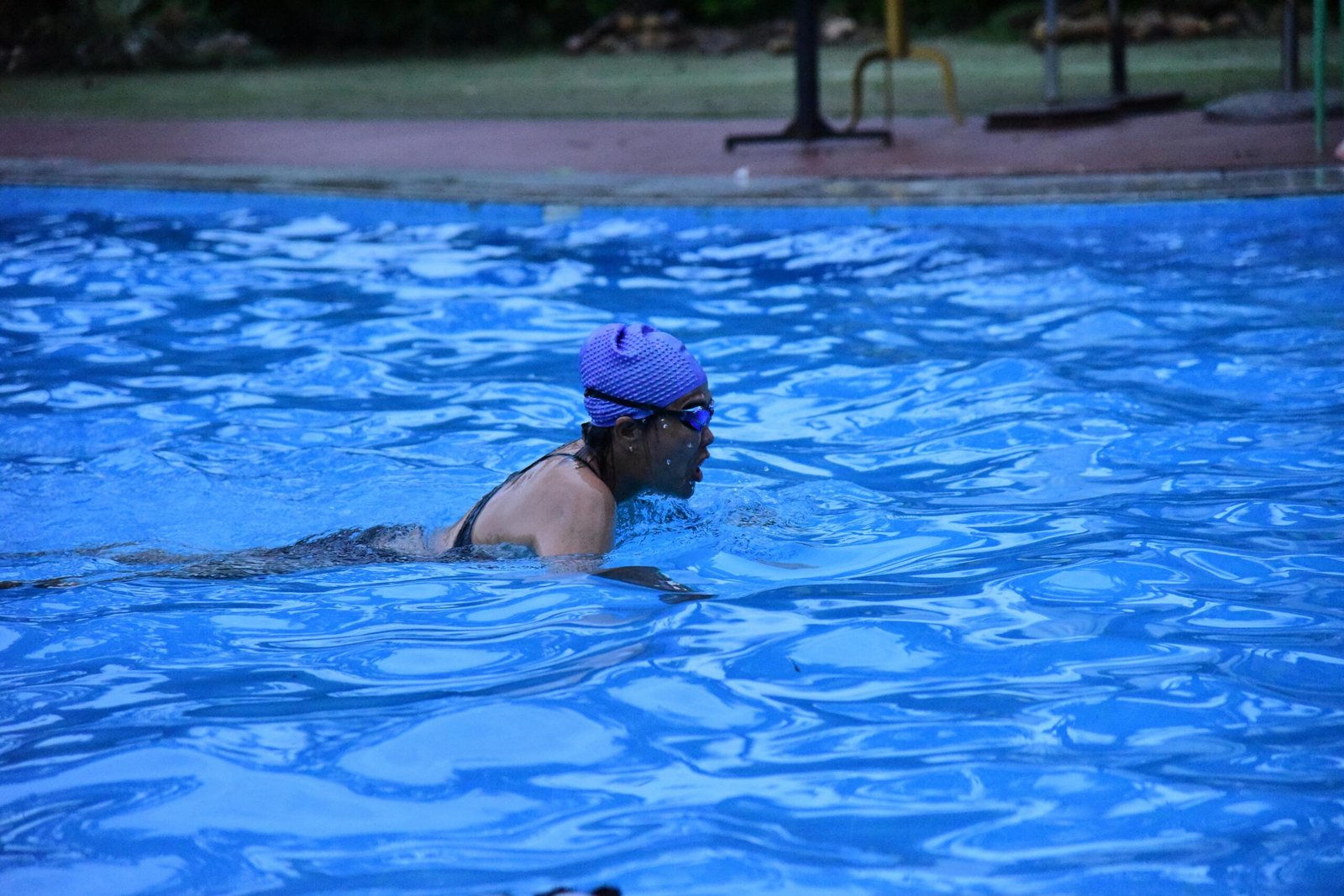
AI swim stroke analysis brings instant, data-driven feedback to swimmers and coaches at all levels. It leverages advanced sensors and artificial intelligence to break down every aspect of your swim technique, revealing inefficiencies that even skilled eyes can miss. Whether you’re a competitive athlete or just refining your freestyle, AI-powered tools streamline improvement—right from your wrist, goggles, or smartphone.
Key Takeaways
- AI swim stroke analysis offers real-time, objective feedback on technique, performance, and efficiency—helping swimmers at all levels progress faster with fewer errors.
- The current swim tech market is rapidly growing, but user complaints, pricing, and data privacy details remain underreported—and are critical to consider before adoption.
- Setup can be remarkably simple with some tools, but facility-level and pro systems may require complex infrastructure and integration with cloud platforms.
The Core Concept: What Is AI Swim Stroke Analysis & Why Use It?
AI swim stroke analysis uses artificial intelligence and advanced sensors to automatically track, record, and analyze swimming performance. Unlike traditional video review, these platforms use real-time data from wearables, underwater cameras, or smart goggles to deconstruct stroke mechanics, posture, power, and efficiency.
You get instant metrics: lap time, stroke rate, distance per stroke, power output—and, in some cases, even automatic posture feedback and error detection. This not only helps competitive swimmers chase personal bests but empowers everyday swimmers to fix stroke errors, save energy, and avoid injury.
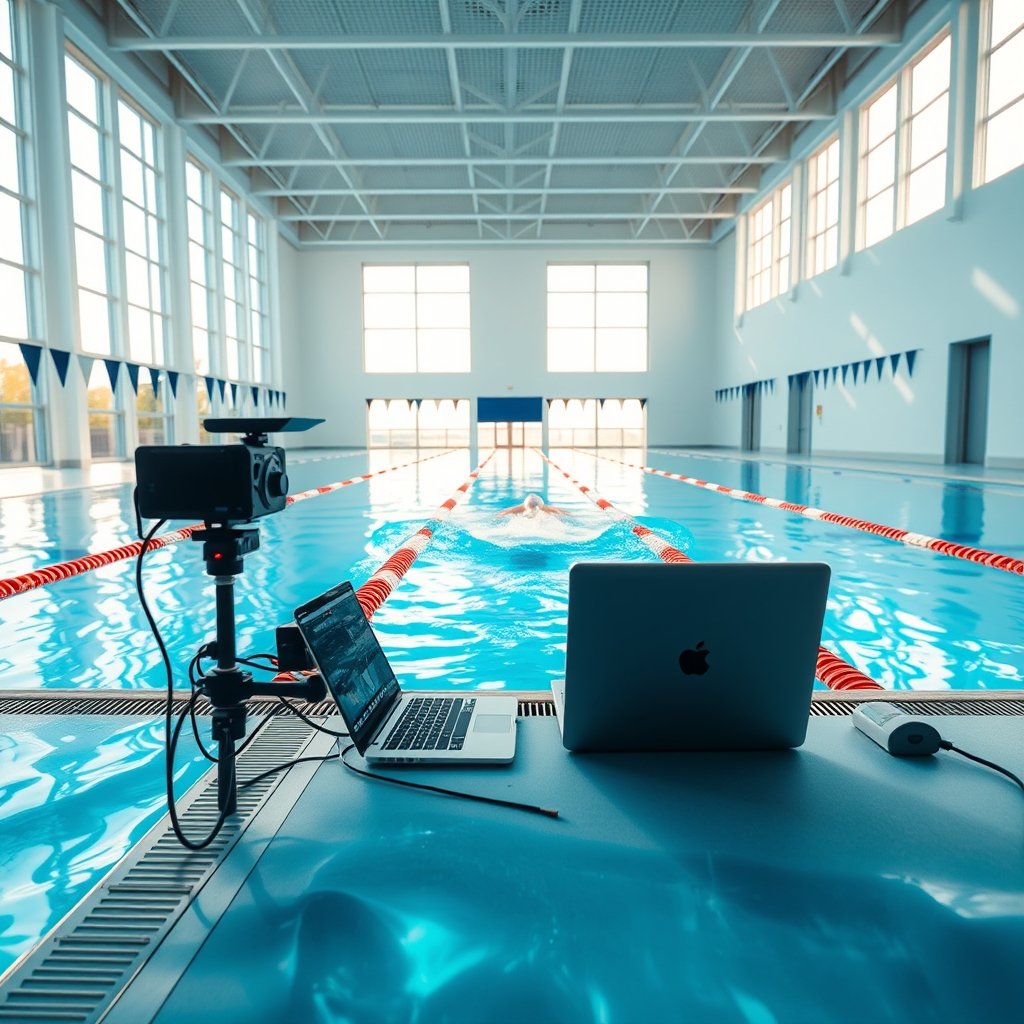
The push for smart AI swim stroke analysis training is backed by rapid market growth. According to SportGearInsider and Future Data Stats, the global swim tech market will more than double by 2030, driven by new launches like the TritonWear sensor and AI-coach app partnerships such as Phlex Swim and Zwift/FINIS.
For more detailed reviews on related swim tech and fitness gear, check out our comprehensive guide to the most common beginner dumbbell mistakes and our popular swimming pool supply store recommendations.
Table of Contents
Step-by-Step Guide: How to Use AI Swim Stroke Analysis for Maximum Gains
- Pick the Right Platform: Start by evaluating whether you want a wearable app, smart goggle system, or full poolside video analysis. Entry-level platforms like iSWIM only require a phone, while devices like Form Goggles or EO Labs handsets offer advanced analytics.
- Set Up Your Hardware: Most consumer-focused apps are plug-and-play—just strap on your device or load the app, then swim as normal. For professional systems, check requirements for sensor placement and camera calibration.
- Connect to the App: Sync your device to its companion app (usually via Bluetooth). Many integrate with platforms like TrainingPeaks for triathlon analysis.
- Swim and Collect Data: Complete your workout. AI starts tracking your laps, strokes, body position, and biometrics in real time.
- Analyze Reports: Once your session ends, review the data. Look for red flags—high drag, poor body position, or imbalanced strokes. Most platforms flag major technical errors and suggest drills.
- Implement Technique Adjustments: Apply the recommended corrections in your next session. Use the app’s feedback to set concrete goals—like increasing distance per stroke or improving posture through specific drills.
- Repeat & Track Progress: Compare session-over-session metrics. Watch for improvements like lower lap times or more efficient power output.
- Share Data with Coaches or Training Partners: Many systems allow instant sharing for extra accountability or professional review.
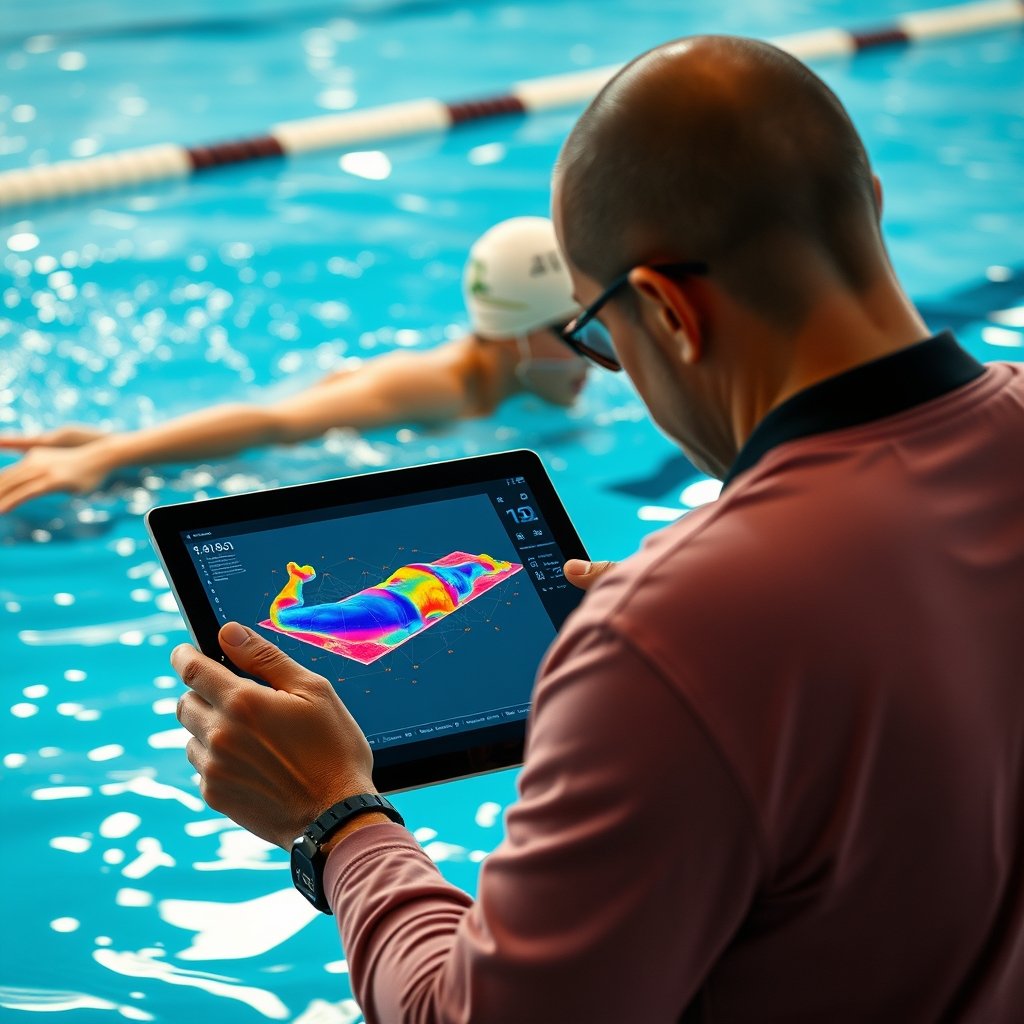
Pay close attention to the metrics that matter for your goals. For example, if you’re targeting endurance events, monitor distance per stroke and overall efficiency, not just raw speed. If you’re interested in combining swim workouts with other functional routines, see our beginner’s breakdown of walking yoga routines for cross-training inspiration.
7 Ways AI Swim Stroke Analysis Are Changing The Sport Forever
Way 1: AI swim stroke analysis Identifies Stroke Flaws That Coaches Standing Poolside Simply Cannot See The human eye processes movement at a speed that misses the micro-corrections happening within each individual stroke cycle. AI swim stroke analysis tools use high-frame-rate video processing to capture and evaluate every degree of elbow angle, every millisecond of hand entry timing, and every subtle hip rotation deviation that occurs too quickly for any coach to observe in real time. Swimmers who have trained under experienced human coaches for years regularly discover stroke inefficiencies through AI analysis that nobody had ever identified — not because the coaches were inadequate but because the technology sees what human perception physically cannot.
Way 2: It Gives You Objective Data Instead of Subjective Feedback Traditional swim coaching relies heavily on the coach’s eye, experience, and ability to communicate what they observe into actionable instruction. AI stroke analysis removes subjectivity entirely by translating movement into measurable data points — stroke rate, distance per stroke, entry angle, catch depth, kick frequency, and body rotation — that do not change based on who is watching or how they feel that day. A swimmer who knows their left arm entry is consistently seven degrees too wide has a precise, trackable target to correct. A swimmer told to “enter the water a little cleaner” has an impression to chase.
Way 3: It Tracks Improvement With a Precision No Training Log Can Match Knowing that your stroke feels better after three weeks of focused training is satisfying but unmeasurable. AI analysis platforms store baseline stroke data from your first session and compare every subsequent session against it with quantified metrics that make improvement visible rather than just felt. A two-degree improvement in catch angle, a reduction in stroke count per length, or a measurable increase in distance per stroke are the kinds of concrete progress markers that sustain training motivation through the plateaus that cause most swimmers to abandon their technique work entirely.
Way 4: It Allows Coaches to Deliver Remote Technique Coaching at a Professional Level The geographic barrier between a serious amateur swimmer and a high-level technique coach has been almost entirely eliminated by AI stroke analysis. Swimmers in cities without elite coaching infrastructure can now record their sessions, submit the footage to an AI analysis platform, receive detailed biomechanical breakdowns, and share those reports with a remote coach who delivers targeted corrections without ever standing on the same pool deck. Elite swimming technique coaching is no longer exclusively available to athletes who live near elite programs or can afford in-person training camps.
Way 5: It Personalizes Drill Selection Based on Your Specific Biomechanical Profile Generic drill sets prescribed to an entire training group address average stroke problems — not your stroke problems. AI swimming coach app analysis identifies the specific inefficiencies in your individual movement pattern and recommends the exact drills that address those specific flaws rather than a broad curriculum designed for a hypothetical average swimmer. A swimmer whose primary inefficiency is a dropped elbow at the catch receives a completely different drill prescription than one whose inefficiency is a crossover entry — even if both swimmers appear to have similar overall times.
Way 6: It Detects Fatigue-Related Stroke Breakdown Before the Swimmer Feels It One of the most valuable and least discussed applications of AI stroke analysis is its ability to identify the point in a training set where stroke mechanics begin to deteriorate under fatigue — often before the swimmer is consciously aware that their technique is breaking down. Knowing precisely at what point in a set your catch angle collapses, your stroke rate drops, or your body rotation decreases allows you to design training sets that build endurance at the edge of technical failure rather than well inside it or dangerously beyond it. This single insight transforms how serious swimmers structure their distance training.
Way 7: It Makes Technique Work Engaging Enough to Actually Do Consistently The honest reason most swimmers neglect stroke technique work is that the feedback loop is too slow and too vague to sustain consistent effort. Grinding through drill sets for weeks without any measurable confirmation that something is changing is motivationally unsustainable for the majority of athletes. AI analysis closes that feedback loop by delivering visible, quantified proof of improvement after every session — turning technique work from an abstract obligation into a data-driven pursuit with clear milestones and measurable wins. Swimmers who use AI analysis consistently report that technique sessions become the part of training they look forward to most rather than the part they find reasons to skip.
Advanced Analysis & Common Pitfalls
AI swim stroke analysis tools aren’t perfect—they’re advancing fast, but research shows some critical capability and data gaps to note in AI stroke correction tool.
Most Common Pitfalls and Limitations
- Lack of Transparent User Data: So far, few tools publish user complaint logs, technical bug reports, or satisfaction ratings. Real-world reliability is hard to verify, especially for new entrants.
- Limited Documentation on Sensor Accuracy: Sensor precision and error margins aren’t widely reported, making it tough to compare “accuracy” across brands.
- Pricing Data Remains Opaque: Many apps and devices highlight funding rounds but not actual subscription fees or what’s included in paid tiers.
- Privacy Policies and Security Measures Underreported: Almost no brands release details on data encryption, user authentication, or compliance with standards like GDPR.
- User Experience Can Vary Widely: Learning curves and integration hurdles may exist, especially with pro systems that require facility-level setup and camera calibration.
| Topic | Data Availability | Quality |
|---|---|---|
| Market growth statistics | ✔ Complete | High – quantified |
| User complaints/challenges | ✖ Absent | N/A |
| Performance improvements | ◑ Partial | Medium – mainly anecdotal |
| Pricing information | ◑ Minimal | Low – generic investment data only |
| Technical requirements | ◑ Partial | Medium – known devices but few specs |
| Privacy/security | ✖ Absent | N/A |
What’s Missing or Underexplored?
- User Experience Benchmarks: No platform publicly compares abandonment rates, learning curve, or technical hiccups for end users.
- Competitive Feature Comparison: Very little direct analysis on what makes one tool better for a specific swimmer, coach, or facility.
- Proven ROI Data: Beyond a handful of case studies (like Paige Madden improving her 800m by 19 seconds with EO Labs), long-term and average improvement metrics are scarce.
- Data Security: No clear best practices or standards stated by market leaders like Phlex Swim, TritonWear, or iSWIM.
If you want to dig into swimming performance AI and adjacent fitness or swim optimization guides, our coverage of pool water maintenance routines and athletic sock mistakes for swimmers can help address other overlooked issues in aquatic training.
Conclusion
AI swim stroke analysis opens the doors to personalized, efficient swim training for everyone—from Olympians to recreational lap swimmers. While adoption rates are spiking and individual results can be dramatic, transparency regarding cost, security, accuracy, and user satisfaction is still lagging behind the hype. If you’re considering integrating AI swim stroke analysis into your regimen, start with an easy-to-use platform and keep an eye on future updates for improved feature transparency and privacy guarantees. Ready to level up your swim training? Explore our in-depth guide on AI swim stroke analysis tools and see what real-time feedback can do for your performance. The best AI swim training app is available online.
FAQ
Which swimmers benefit most from AI swim stroke analysis?
Both competitive athletes chasing faster times and recreational swimmers who want safe, technical improvement can benefit. Youth teams and masters programs are also adopting AI tools for error correction and motivation tracking.
What metrics do AI swim stroke analyzers track?
Common metrics include lap time, stroke rate, distance per stroke, power output, heart rate, calories burned, and body position—plus technical flags for errors.
How accurate are consumer-grade AI swim stroke analysis devices?
Most claim high accuracy but do not publish independent validation studies or specific error margins. Expect fast feedback but verify major technique fixes with a coach when possible.
Will I lose access to my swim data if I stop paying for my app?
It depends on the app. Some platforms offer free, limited analytics with paid tiers for advanced breakdown. Data retention and portability practices vary—always read the terms before committing.
How do I get started if I don’t have sensors or smart goggles?
Try mobile video-based AI apps like iSWIM. Record your swim with a phone, upload it, and receive actionable analysis—no wearable devices required for basic feedback.