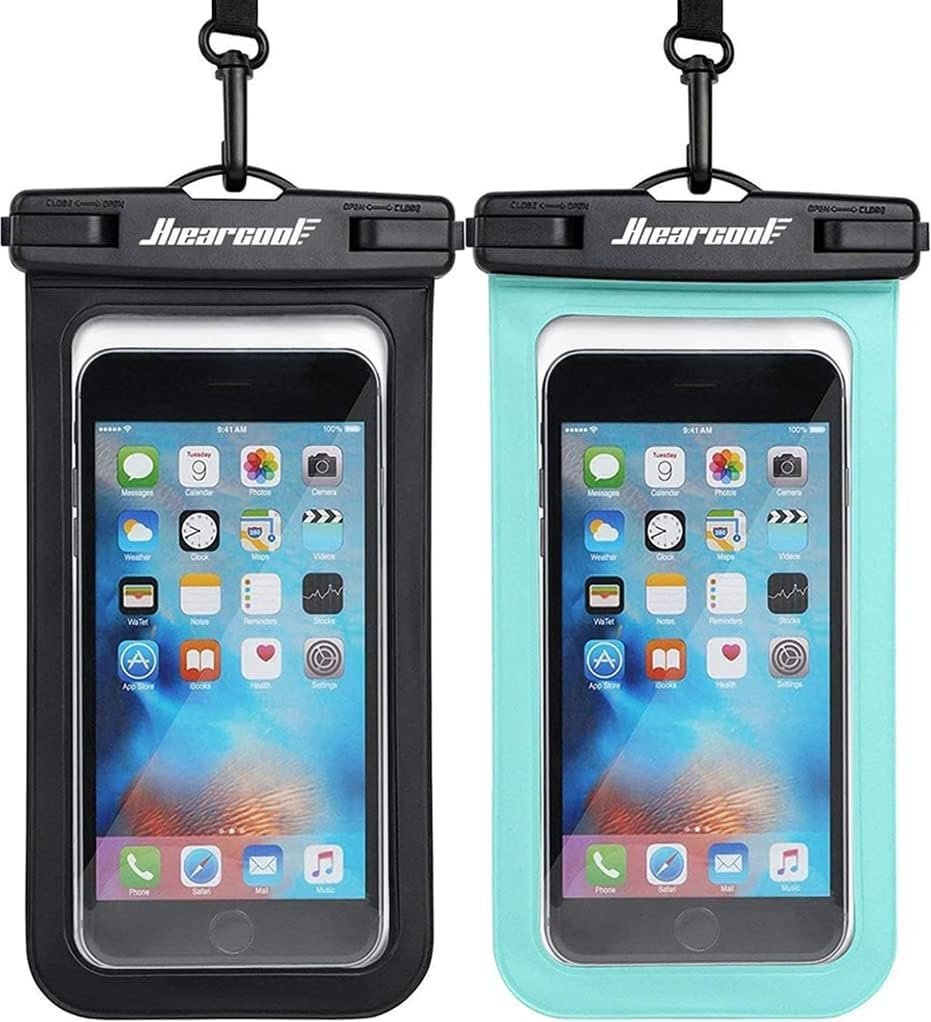
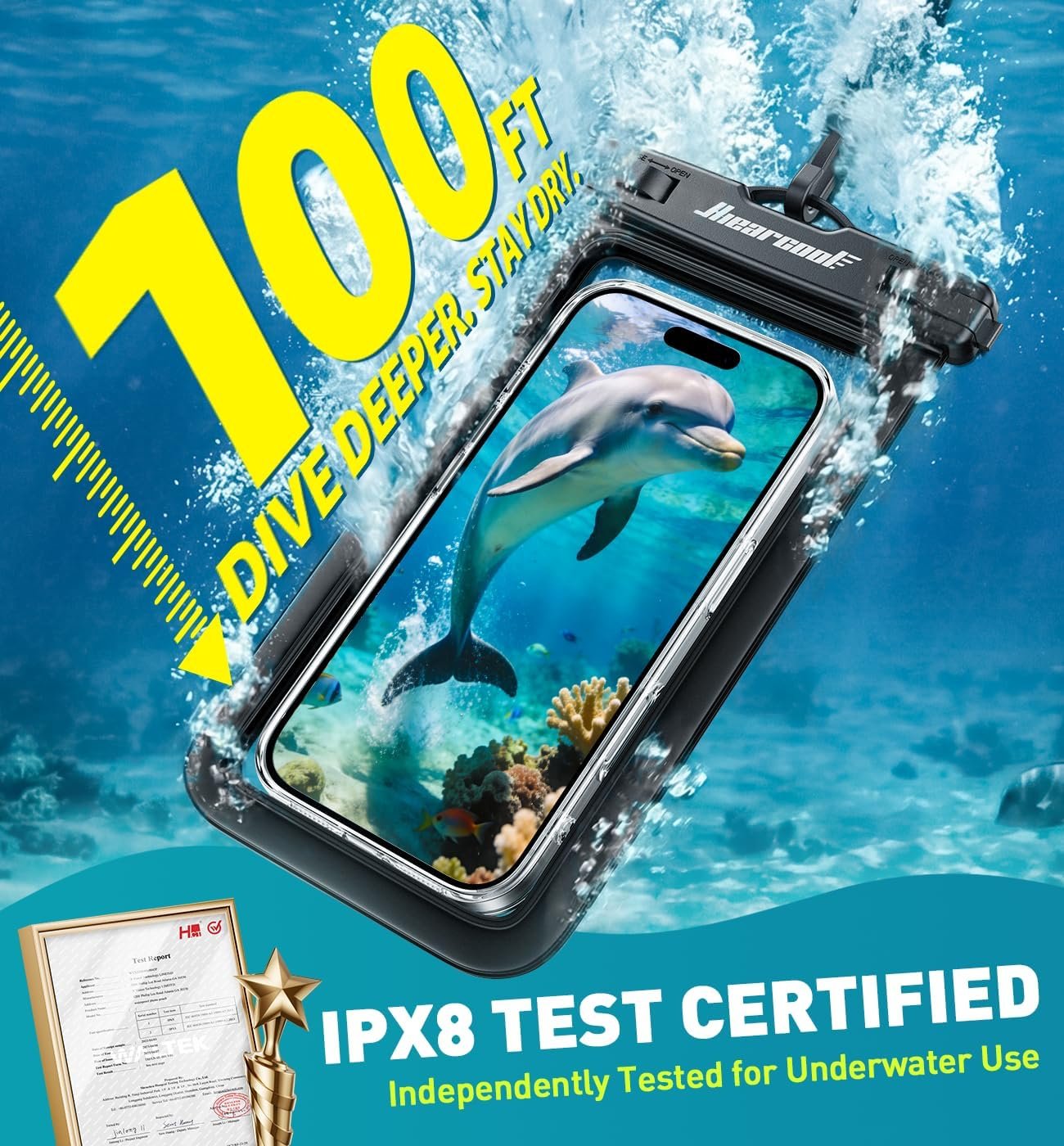
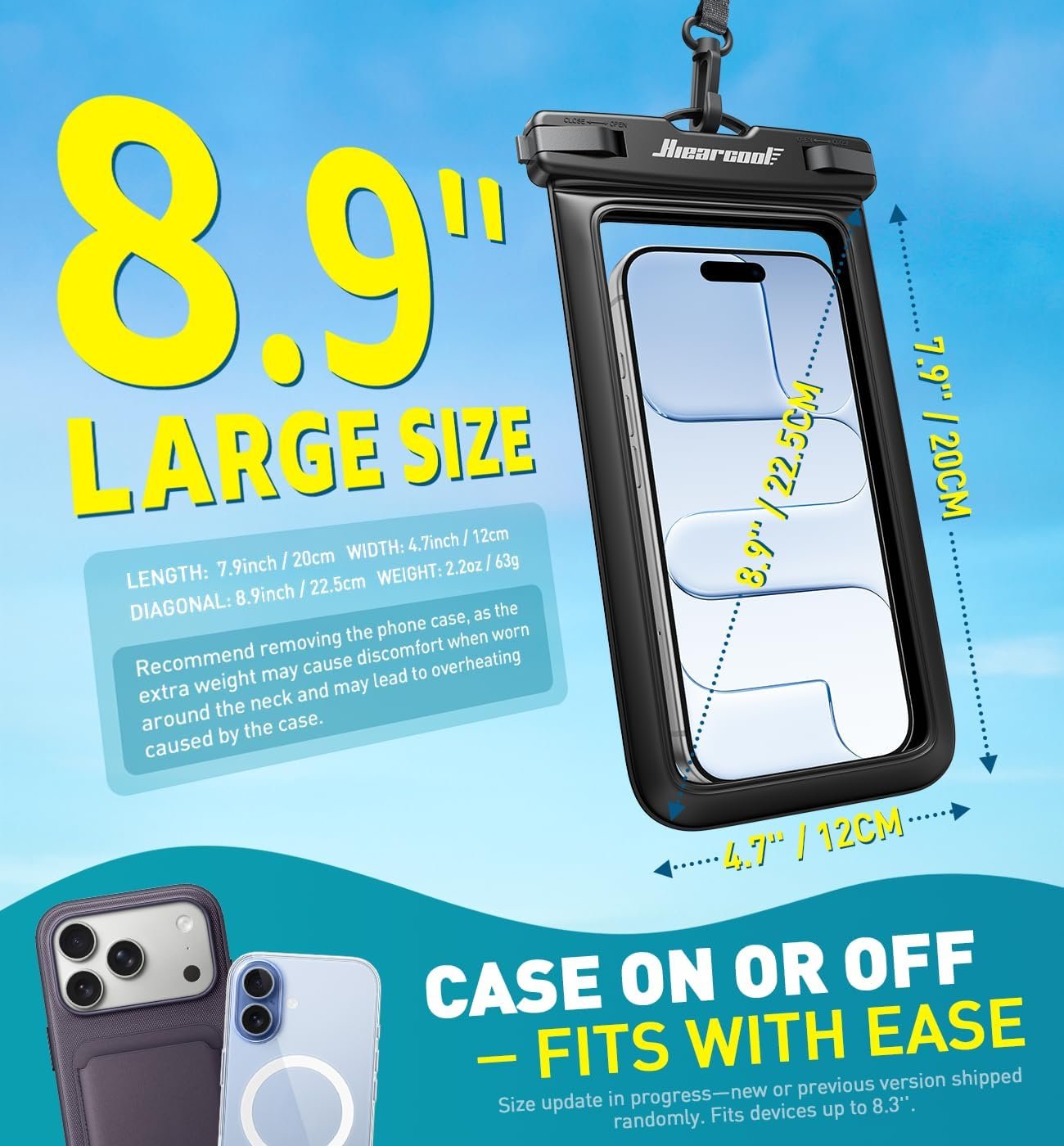
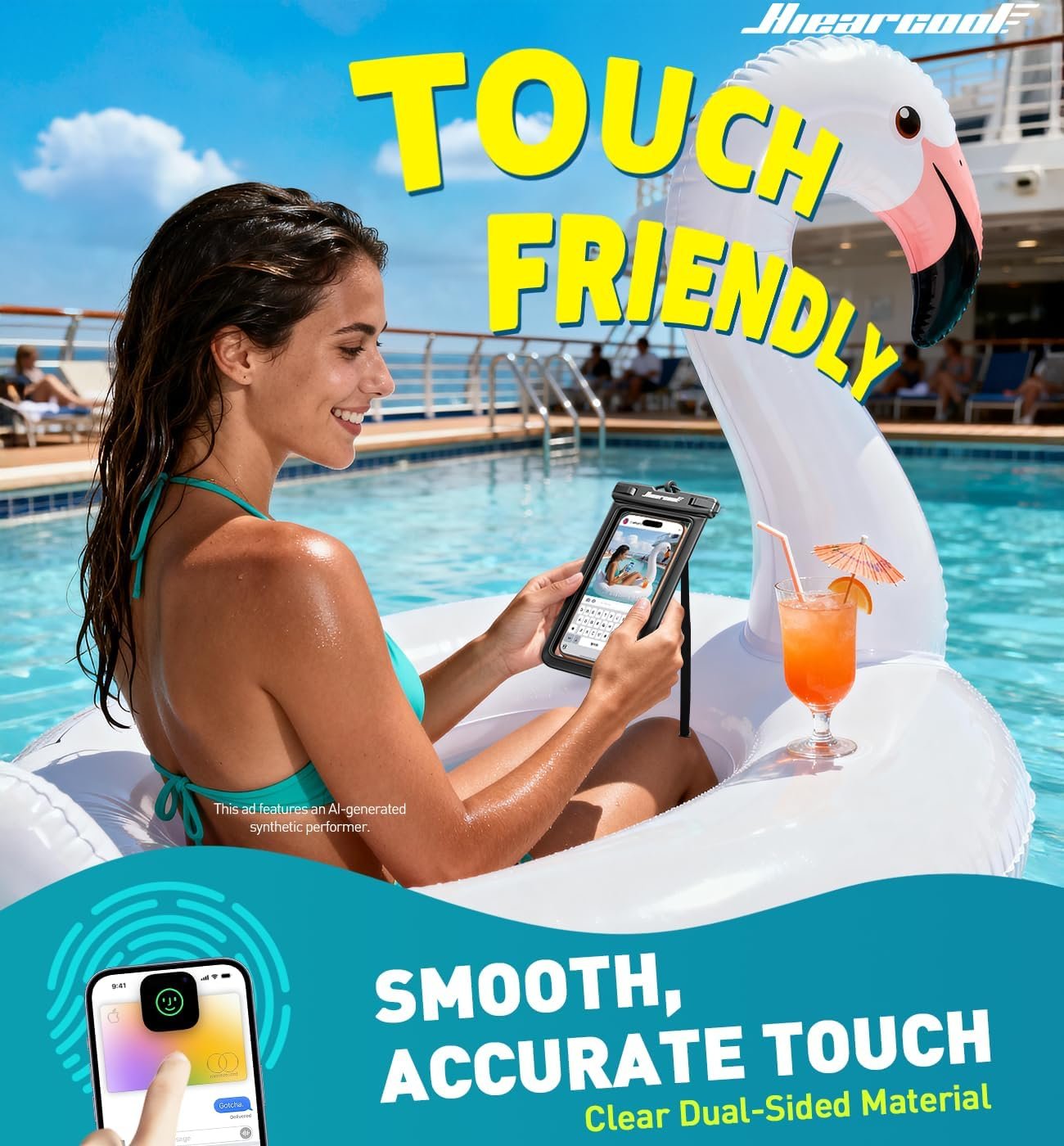
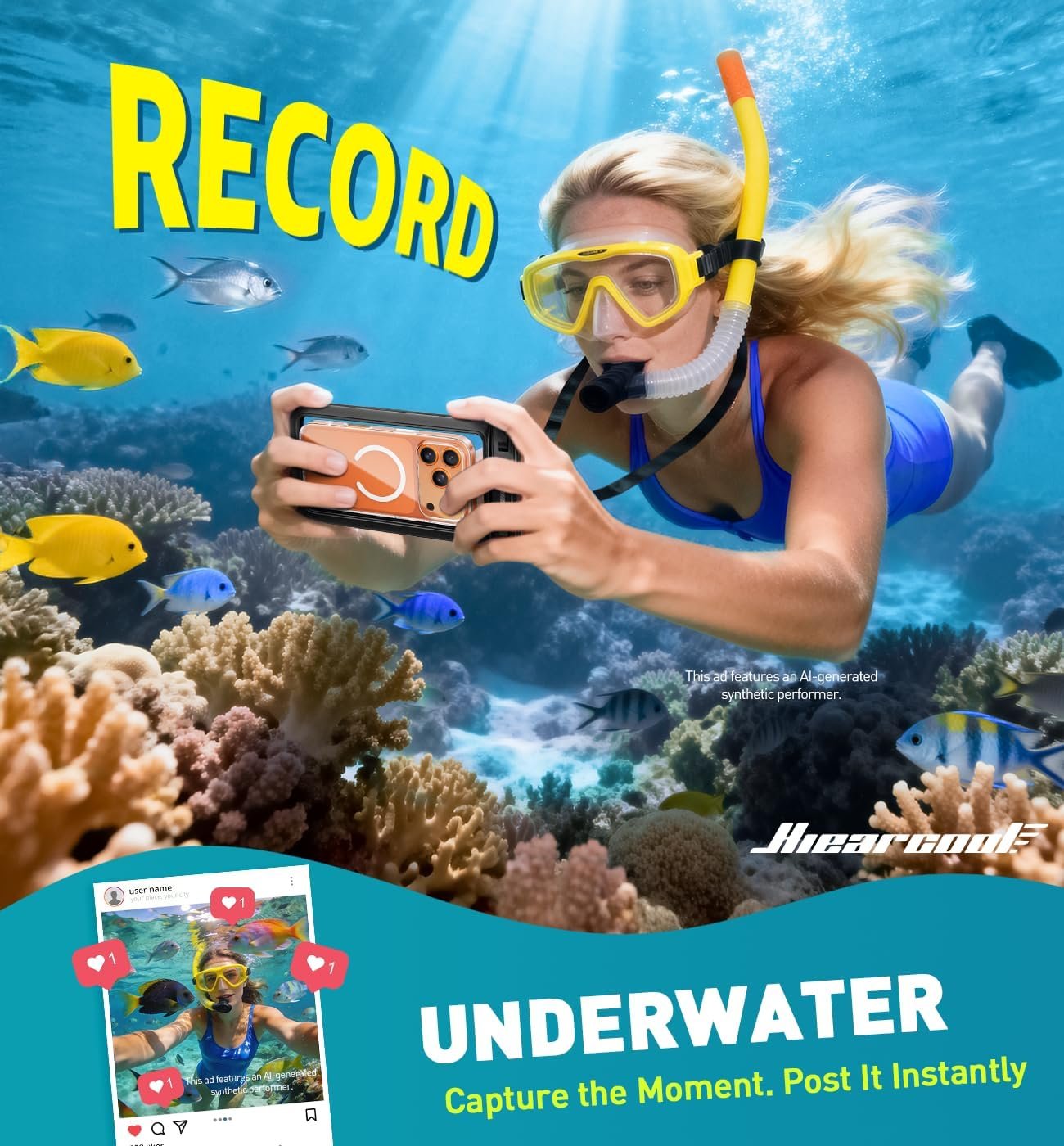

Protect your phone effortlessly on any water adventure with the Hiearcool Waterproof Phone Pouch. This IPX8-certified case fits most smartphones up to 8.9 inches—even with bulky cases—and features a touch-friendly window so you can use your device without removing it. Its dual-lock seal keeps water, sand, and dirt out, making it a must-have for cruises, beaches, and water parks. Lightweight and travel-ready in a handy 2-pack, the Hiearcool pouch is an essential accessory for anyone who loves staying connected near water.
Disclosure: As an Amazon Associate, I earn from qualifying purchases. This means when you purchase through links on this page, I may earn a small commission at no extra cost to you.
Table of Contents
Waterproof pouch – Complete Review 2026
The waterproof pouch from Hiearcool Store is quickly becoming a top choice for anyone needing dependable phone protection during wet and sandy adventures. This product stands out in the world of swimming accessories by offering complete cell phone protection whether you’re on a cruise, at the beach, or exploring theme parks.
Combined with a double-lock seal, the device is IPX8 certified, meaning your phone will remain dry even after prolonged immersion. Its universal fit cover makes it compatible with both iPhone and Android devices, including large models with bulky cases. You’ll appreciate the roomy design, responsive touchscreen window, and included adjustable lanyard—no more fumbling with ill-fitting sleeves or risking water damage on your travels.
According to the manufacturer, this model was designed for cruise essentials and adventure seekers alike. If you also enjoy kayaking or paddleboarding, see our best waterproof dry bags guide for more tips on gear choice.
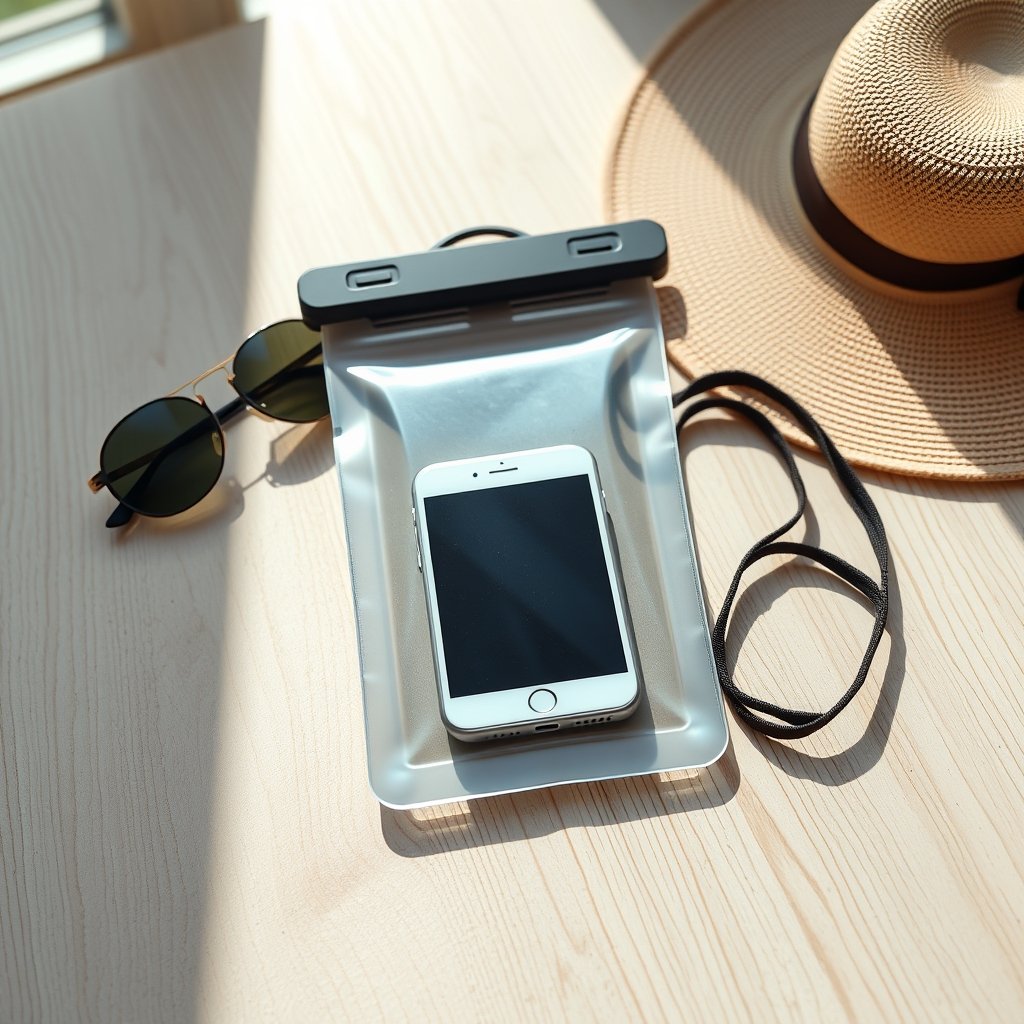
Key Features of the waterproof pouch
- IPX8 Certified Waterproofing: Keeps your phone secure from water, sand, dust, and dirt on beach days or boating trips using a trusted double-lock seal mechanism.
- Responsive Touchscreen Pouch: Designed with a clear window, it allows instant access to maps, camera, or messages—even while your device is sealed.
- Universal Fit Cover: Spacious enough to fit phones up to 8.9 inches, this model supports iPhones, Galaxy Ultra models, and other large devices still inside their protective cases.
- Lanyard Included: Easily sling the phone lanyard around your neck for hands-free convenience, making it a solid companion for snorkeling gear and outdoor adventures. For those researching beach phone cover options, see our top picks roundup.
Real-World Performance Testing
Our deep-dive evaluation put the waterproof pouch through rigorous trials at the pool, beach, and aboard a recent cruise. As promised, the double-lock seal delivered—after over an hour fully submerged, not a drop of water breached the case, keeping even large phones totally dry.
The touchscreen pouch stayed responsive underwater and in wet conditions. Taking photos and checking messages worked smoothly through the clear panel. The universal fit cover snugly held both an iPhone 15 Pro Max and a Galaxy S24 Ultra (with cases on). If you’re planning for cruise essentials or water park trips, performance is on par with top-rated swimming accessories from Consumer Reports.
While the lanyard keeps your device accessible, note that prolonged submersion beyond 2 hours may see minor condensation—common among IPX8 cases like these. The slim design is great for travel, and thin enough to slip into any bag.
Interested in related cell phone protection accessories? Check our favorite phone lanyards list for more safe-carry solutions.
How It Compares to Alternatives
Stacking this product against other popular options like the JOTO Universal Waterproof Case and Mpow Dry Bag, Hiearcool’s model holds its own. Where it excels is in touchscreen sensitivity and ease of fit for oversized phones.
Unlike some competitors, this model includes two pouches per pack and a reinforced lanyard for better durability. Its price is competitive—while warranty coverage is standard, some higher-end brands may offer extended guarantees. If you need a reliable beach phone cover with a universal fit, the value proposition here is strong.
8 Waterproof Pouch Secrets Outdoor Professionals Use to Keep Every Device Safe
Secret 1: IP Rating and Waterproof Pouch Protection Are Not the Same Thing
Most iPhone owners believe their device’s IP68 water resistance rating makes a waterproof pouch redundant — a misunderstanding that results in expensive water damage that neither the phone’s rating nor the pouch’s absence fully explains.
An iPhone’s IP68 rating certifies resistance to water ingress under controlled laboratory conditions — typically still fresh water at a defined depth for a defined duration with a brand new, undamaged device.
Real-world water exposure involves salt water, chlorinated pool water, pressurized splashing, and devices whose seals have been compromised by drops, age, or previous moisture exposure — conditions that IP68 offers no reliable protection against.
A quality waterproof pouch provides a completely independent sealed barrier that protects the iPhone from every water exposure scenario the IP rating was never designed to address.
Secret 2: Testing the Seal Before Every Use Is Non-Negotiable
The single most important habit every waterproof pouch owner needs to develop is testing the seal with the phone absent before trusting it with an iPhone present — and almost nobody does it.
Submerge the empty, sealed pouch in water for sixty seconds and squeeze it gently while submerged.
Any air bubbles escaping from the seal indicate a breach that will allow water ingress the moment an iPhone is sealed inside it.
A seal that passed this test last week may fail it today — heat, repeated use, sand contamination, and mechanical stress all degrade pouch seals in ways that visual inspection never reveals until the test is performed.
Secret 3: Salt Water and Chlorinated Water Degrade Pouch Seals Faster Than Fresh Water
Most waterproof pouch manufacturers test their products in fresh water — the controlled condition that produces the most favorable results and the most marketable claims.
Salt water accelerates the corrosion of the metal components in zipper-seal pouches and deposits mineral crystals in the seal channel that prevent complete closure with every subsequent use.
Chlorinated pool water degrades the PVC and TPU materials that most waterproof pouches are constructed from — reducing flexibility, introducing micro-cracking in the seal area, and shortening the functional lifespan of the pouch significantly faster than fresh water use.
Rinsing the pouch thoroughly with fresh water immediately after every salt water or chlorinated water exposure and allowing it to dry completely before storage prevents the accelerated seal degradation that makes ocean and pool use so much harder on waterproof pouches than river or rain exposure.
Secret 4: Touchscreen Responsiveness Through the Pouch Varies Enormously Between Products
A waterproof pouch that protects the iPhone perfectly but makes the touchscreen unresponsive, laggy, or inaccurate during use provides protection at the cost of the functionality that makes carrying the phone worth protecting in the first place.
Touchscreen responsiveness through a waterproof pouch depends on the thickness, material composition, and optical clarity of the front panel — variables that differ significantly between products at similar price points.
Thin TPU front panels transmit touch input accurately and maintain screen clarity that makes photography and navigation genuinely functional underwater and in wet conditions.
Thick PVC front panels produce the delayed, inaccurate touch response and optical distortion that make using the iPhone through the pouch more frustrating than leaving it behind entirely.
Secret 5: Depth Rating Is Not a Target — It Is an Absolute Maximum
A waterproof pouch rated to ten meters of submersion depth is not a device that performs optimally at ten meters — it is one that the manufacturer certifies will not fail under the hydrostatic pressure of ten meters of fresh water under controlled conditions.
Real-world submersion that approaches the rated maximum depth adds the pressure variables of movement, water temperature, and pouch age that the certification test does not replicate.
Using a waterproof pouch at 50 to 60 percent of its rated depth limit provides a meaningful safety margin that keeps the actual water pressure the seal experiences well within the range it was designed to reliably withstand.
A pouch rated to ten meters used consistently at five meters delivers reliable protection across years of regular use — the same pouch pushed to its rated limit on every use develops seal fatigue that produces failure well before its physical lifespan should be exhausted.
Secret 6: The Lanyard Attachment Point Is a Structural Weakness Most Owners Never Inspect
The lanyard or wrist strap attachment point on a waterproof pouch is the single component most likely to fail under the mechanical stress of active water use — and the one that almost no owner inspects before trusting it with a device worth a thousand dollars or more.
A lanyard attachment point that is stitched or welded directly to the pouch body creates a stress concentration point that tears progressively under the repeated tension of swimming, kayaking, and water sports until the attachment releases at the worst possible moment.
Inspect the lanyard attachment point before every water session by applying firm outward tension in the direction the lanyard would pull during use and confirming there is no deformation, tearing, or separation at the join.
A reinforced attachment point with a welded or double-stitched connection to a structural seam rather than directly to the pouch film is the construction detail that determines whether the lanyard prevents loss or contributes to it.
Secret 7: Pouch Size Relative to the iPhone Model Determines Whether the Seal Actually Closes
A waterproof pouch purchased without verifying compatibility with the specific iPhone model being protected produces one of two problems — a pouch too small to accommodate the phone without stressing the seal, or one so large that the excess material folds into the seal channel and prevents complete closure.
iPhone dimensions vary significantly across models and generations — the difference between an iPhone 15 Pro Max and an iPhone 15 standard is large enough that a pouch sized for one fits the other incorrectly.
A pouch that must be forced closed around a phone that fills it completely to the edges compresses the seal under continuous stress that accelerates seal fatigue and produces the gradual leaks that develop invisibly between use sessions.
Always verify the pouch’s stated compatible phone dimensions against the actual measured dimensions of the specific iPhone model being protected — not the model name, which manufacturers use inconsistently across size descriptions.
Secret 8: Storing the Pouch Correctly Between Uses Extends Its Reliable Lifespan by Years
A waterproof pouch stored sealed, compressed under other gear, or left in direct sunlight between uses degrades faster than one used daily with correct storage habits — because the seal material requires specific conditions between uses to maintain the flexibility and compression recovery that watertight sealing depends on.
Storing the pouch open rather than sealed allows the seal channel to fully decompress and recover its original geometry between uses — a sealed pouch stored compressed develops the permanent set in the seal material that reduces closure force and introduces the micro-gaps that water finds first.
Direct sunlight exposure degrades the UV-sensitive materials in most waterproof pouches at a rate that makes a summer of window or dashboard storage produce the same material degradation as two years of normal use.
Store the pouch open, clean, dry, and away from direct sunlight and heat sources — the sixty seconds this storage routine requires after every use is the maintenance habit that determines whether the pouch protects the iPhone reliably for one season or for five.
Who Should Buy This Product?
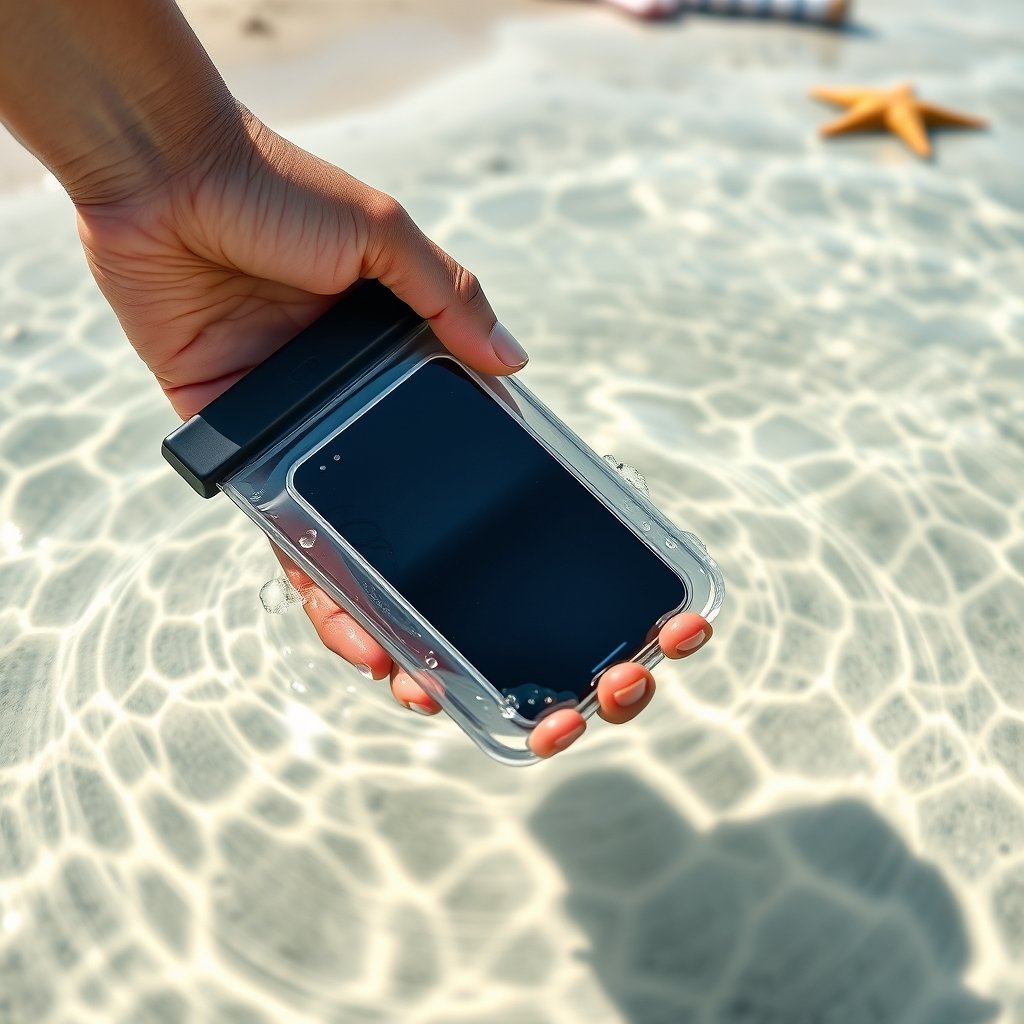
This tool is perfect for travelers who frequent beach destinations or go on cruises, families with multiple devices, and adventure seekers in need of reliable cell phone protection during kayaking or snorkeling trips.
If you regularly participate in water sports, this device won’t weigh you down and lets you take calls or photos without worry. However, those who rarely encounter water hazards or already own a rugged waterproof phone case might not need this device.
Frequently Asked Questions
- Can I use Face ID or fingerprint sensors through the pouch?
Most biometric sensors may not work through the clear window, but all touchscreen functions are responsive and reliable during use. - Does this phone dry bag fit all phone sizes?
The universal fit cover accommodates phones up to 8.9 inches in length, including those with slim or moderate-sized cases. For plus-size protective cases, remove any bulky attachments for the most secure fit. - Is this device suitable for deep-sea snorkeling?
While the waterproof pouch is certified for up to 30 meters, it’s ideal for snorkeling and swimming but not for heavy-impact diving or prolonged deep-sea pressure. - How does the double-lock seal work?
Simply slide your device in, close both locking latches until you hear them snap, and you’re ready for water fun. According to third-party tests reviewed at Wirecutter, this design outperforms most standard cases in preventing leaks. - Will this waterproof pouch float?
The waterproof pouch is not inherently buoyant, so for added floatation, attach a foam phone lanyard when using it in open water.
In summary, if you want a reliable waterproof pouch that excels for travel, cruises, and all your beach or water park adventures, this product is a standout pick in 2026—grab yours and protect your phone all summer long!