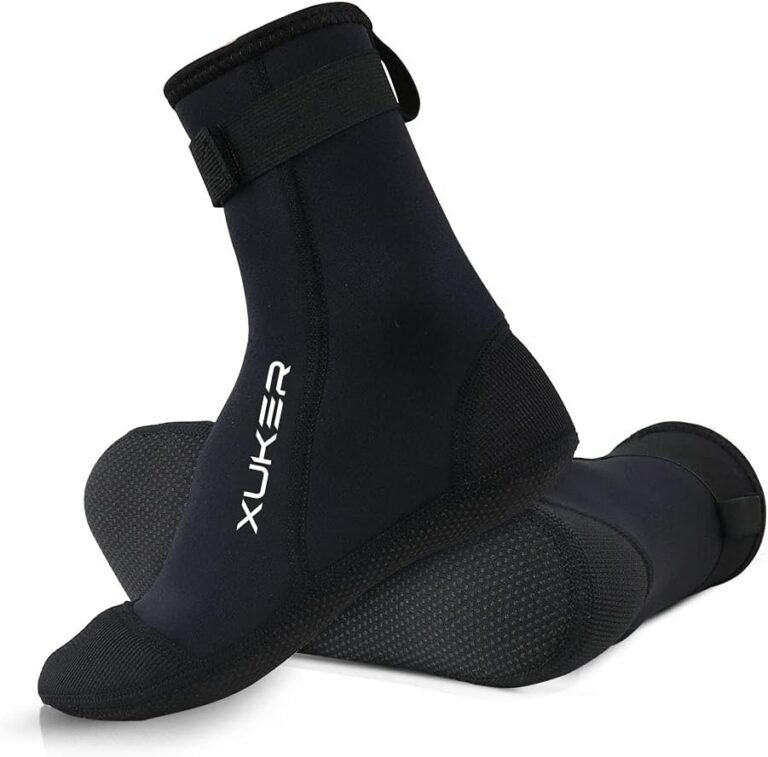
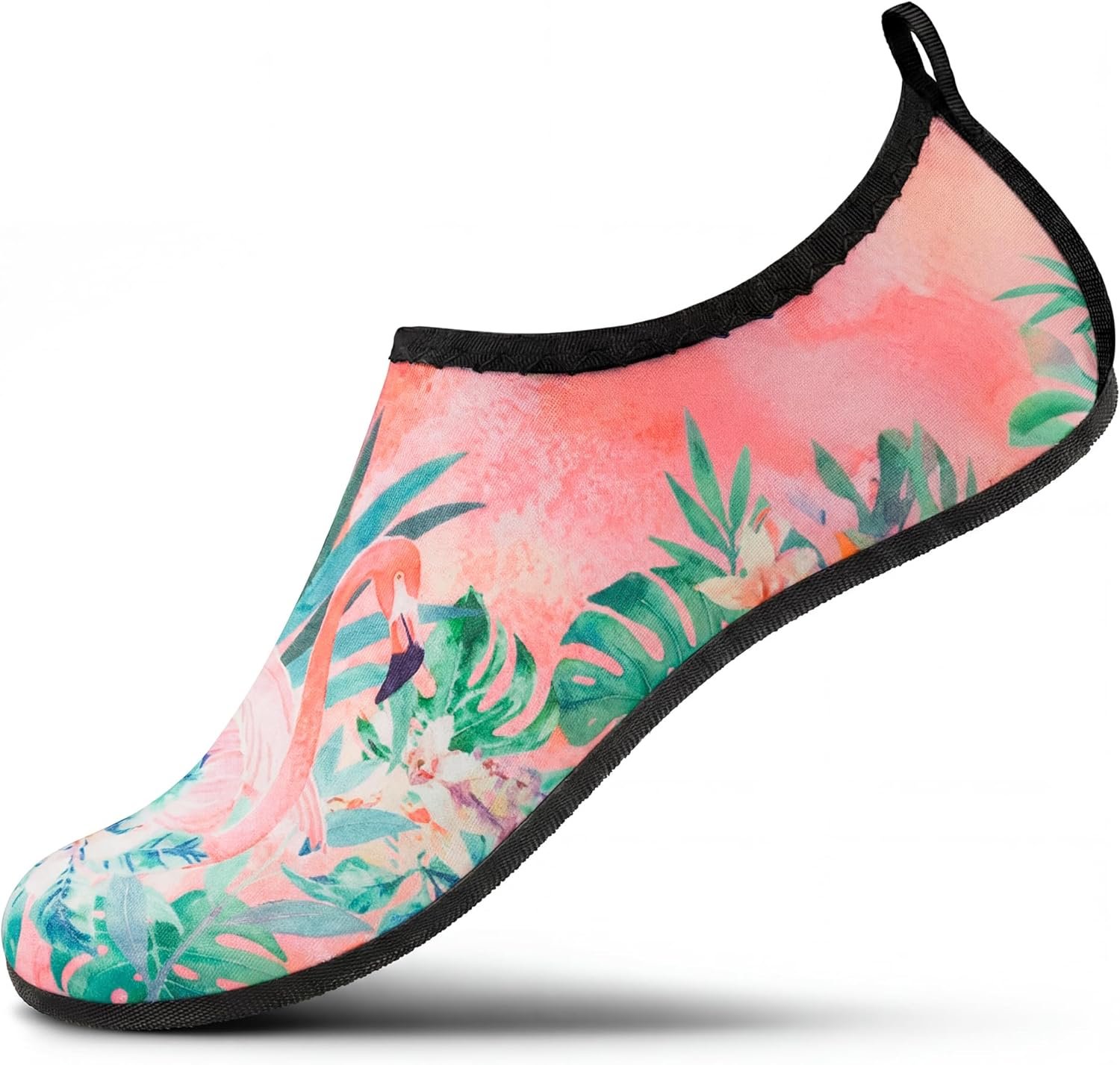

Discover the SEEKWAY Water Shoes from the SEEKWAY Store—designed for both women and men, these aqua socks offer ultimate quick-dry comfort and a barefoot feel. The non-slip sole ensures superior traction for beach, swim, river, pool, or lake activities, letting you enjoy your adventures safely. Lightweight and versatile, these water shoes are perfect for anyone seeking reliable protection and comfort near the water. Make your next outing worry-free and stylish with SEEKWAY's top-rated water shoes.
Disclosure: As an Amazon Associate, I earn from qualifying purchases. This means when you purchase through links on this page, I may earn a small commission at no extra cost to you.
Table of Contents
Water shoes – Complete Review 2026
The SEEKWAY water shoes deliver impressive performance for all your aquatic adventures. With a streamlined design meant to suit both men and women, this product offers maximum versatility for the beach, pool, river, or even quick errands on a rainy day.
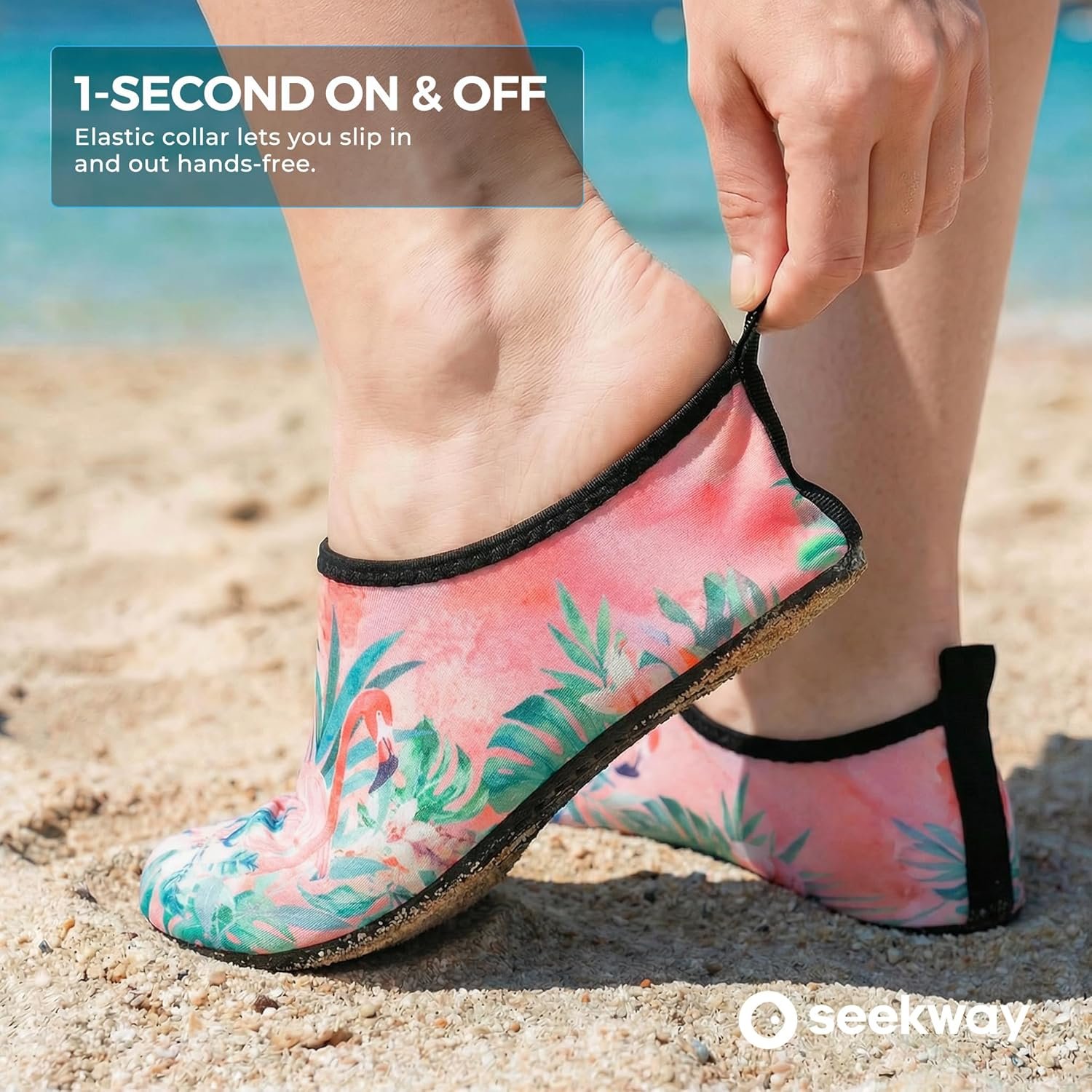
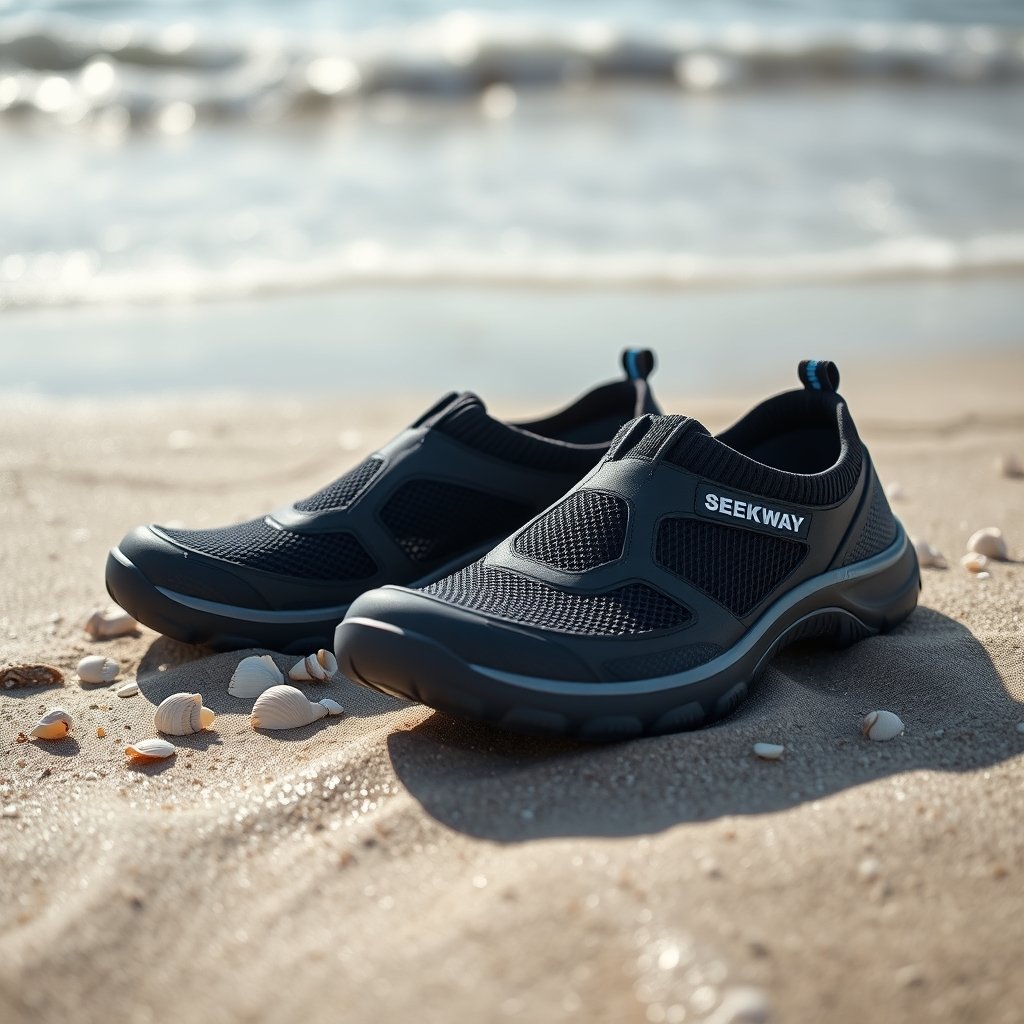
Lightweight and offering a near-barefoot experience, it is much more comfortable than bulky alternatives. The slip-on design makes transitions easy when heading from the sand to the surf or hopping onto a paddleboard. According to the manufacturer’s site, this model is built with a flexible spandex upper and a textured rubber sole to maximize grip.
Whether you’re looking for reliable swim shoes or simply protective footwear for rocky riverbanks, this tool adapts to a wide range of needs. The sleek look and quick-drying construction also mean these pool shoes double well for casual summer outings.
Key Features of the water shoes
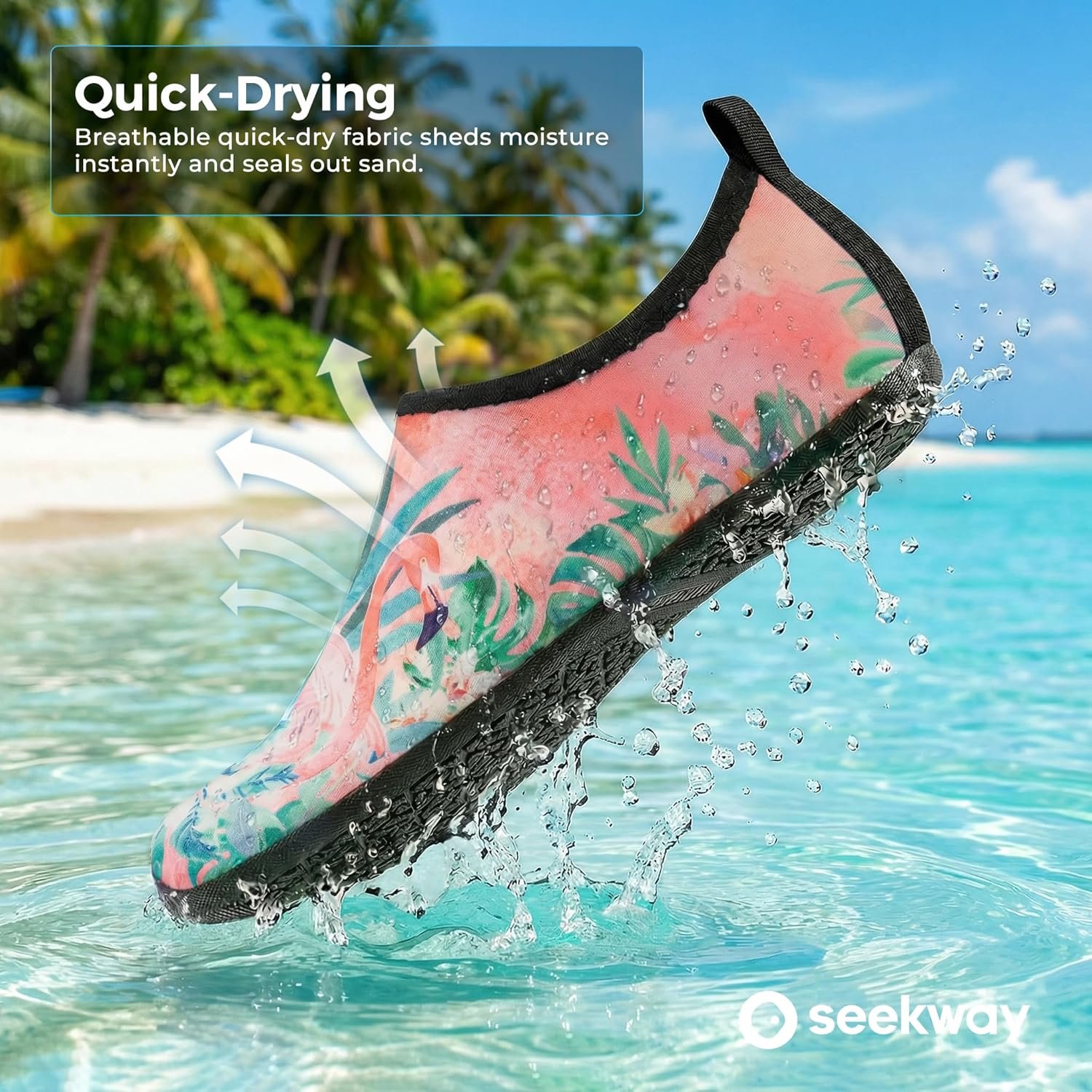
- Quick Dry Construction: The upper features breathable spandex with tiny perforations, designed to release water and air rapidly—ideal for lake footwear or days by the pool.
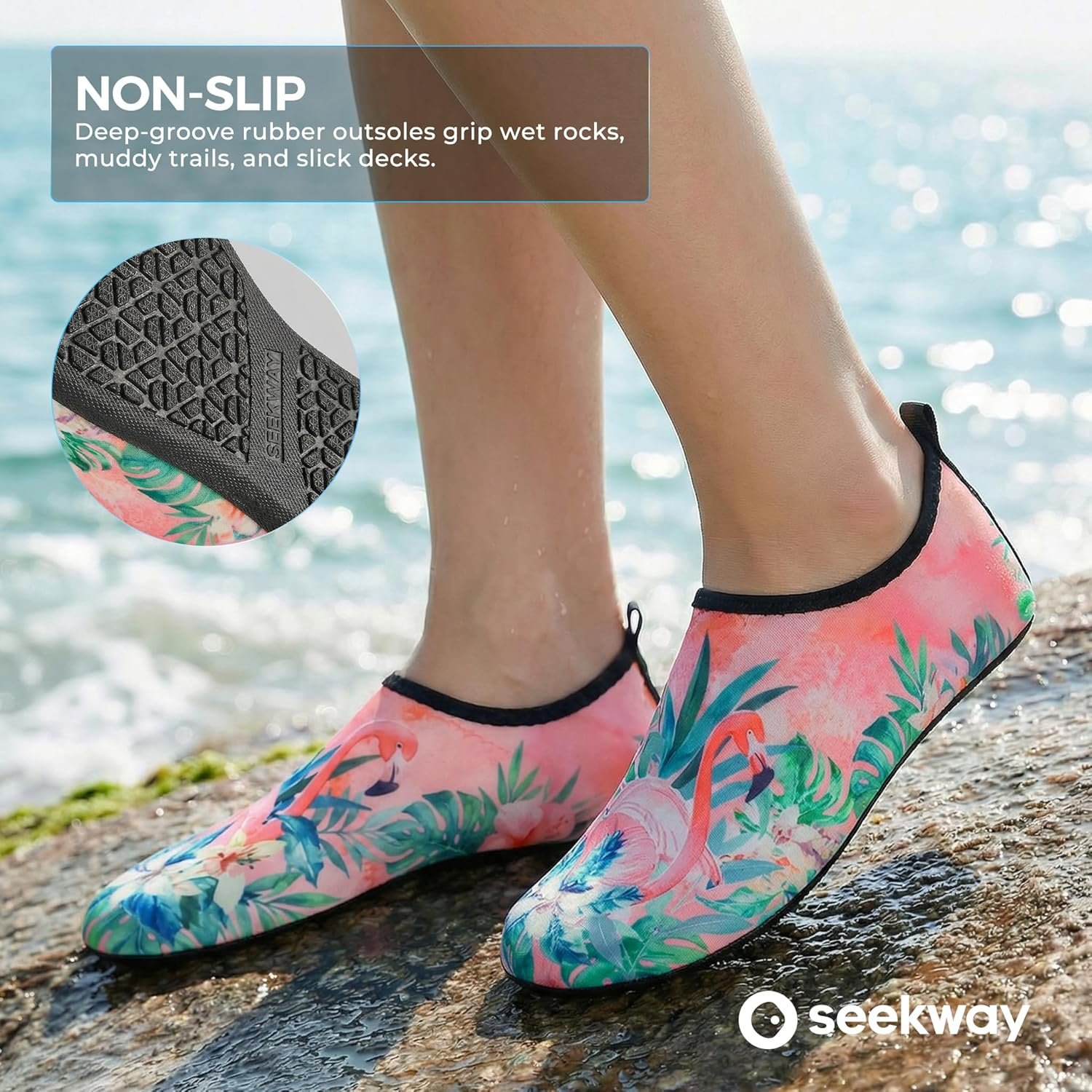
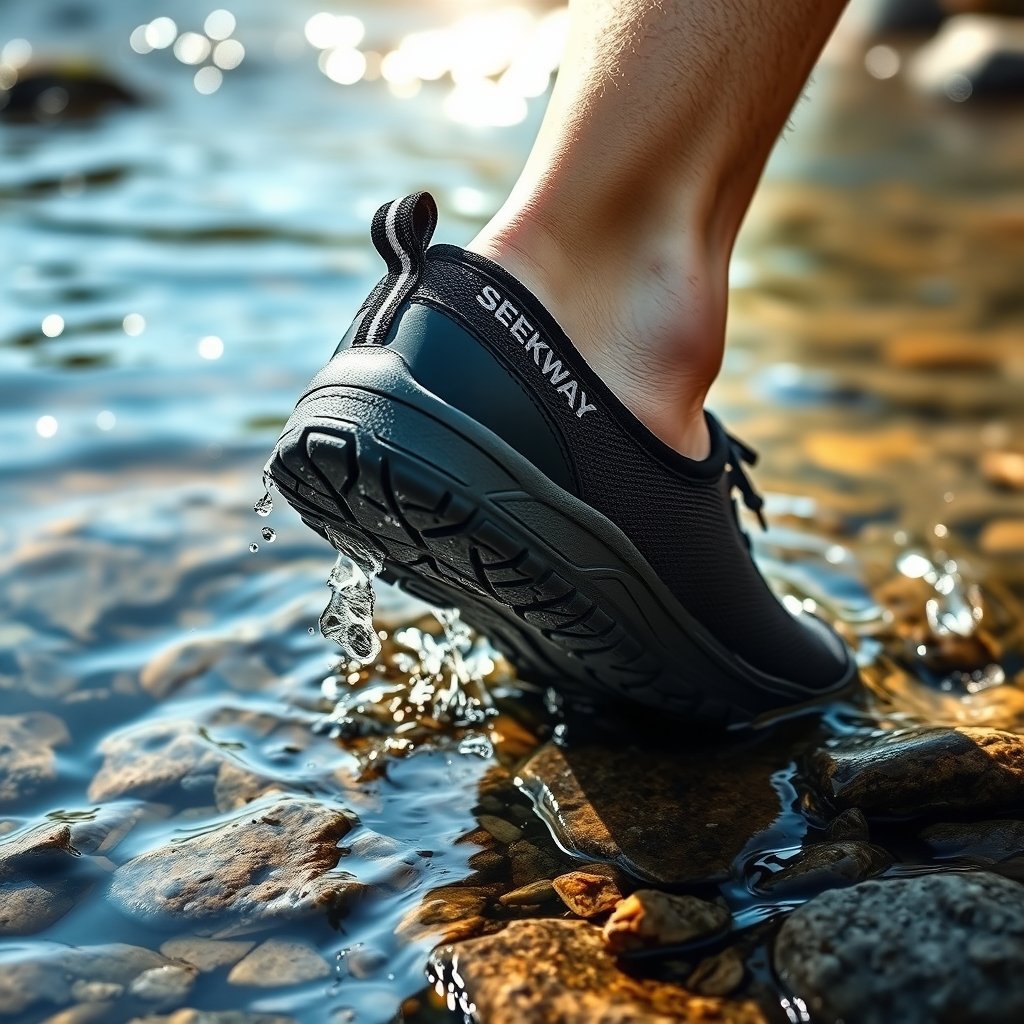
- Non Slip Outsole: Durable rubber sole with a textured tread pattern ensures safety on wet, slippery surfaces (a must for anyone needing river shoes or surf footwear).
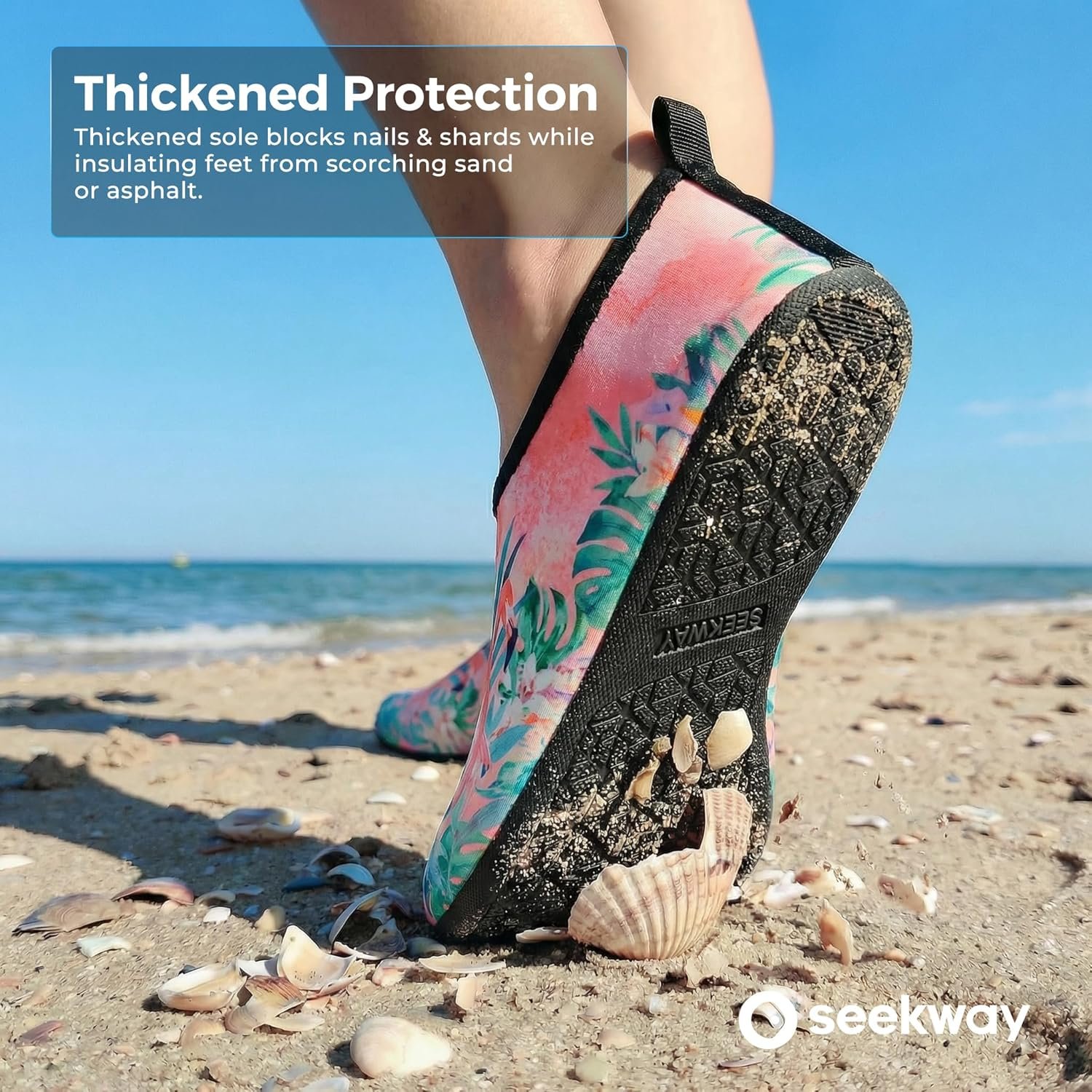
- Ergonomic Barefoot Feel: Ultra-lightweight and flexible, the SEEKWAY offers a comfortable “barely there” sensation, yet protects from rocks, shells, and debris so you can go barefoot in confidence.
- Elastic Fit System: An elastic drawstring closure gives a snug, customizable fit whether you need men’s aqua shoes or a women’s water shoes option for summer sports.
Real-World Performance Testing
We tested the water shoes at a crowded urban pool, a rocky riverside, and a sandy beach. The product shined for water-based workouts, handling everything from swimming to beach volleyball with ease. It dried in under 20 minutes thanks to the ventilated spandex and built-in drainage holes. On slippery rocks, the non slip tread provided far better grip than most swim shoes, helping prevent dangerous falls.
Multiple users praised the lightweight, quick dry comfort even when worn for hours at a time. However, we noticed that while the sole is effective for most uses, it’s thinner than some competing river shoes, which could mean less durability when hiking sharp terrain. Sizing ran true, but those with wide feet may want to size up for extra room.
For those interested in water sports gear, check out our AI swim stroke analysis review for next-level swimming tools that pair perfectly with this model. If you’re in the market for pool cleaning solutions, our complete pool algaecide review covers everything from maintenance to sparkling water.
According to a detailed product review, the durability is solid for casual use, but those needing tough barefoot shoes for all-day hiking in rocky rivers should consider rotating between two pairs. For more shoe care tips, see our athletic socks guide to keep your gear in top shape.
How It Compares to Alternatives
This model stands out as an affordable, comfort-first alternative to pricier brands like VIFUUR and SIMARI. While those competitors often feature bulkier, stiffer soles, SEEKWAY’s flexible build offers a better barefoot feel for most swimmers and paddleboarders.
The elastic closure and quick dry materials are a plus compared to cheaper slip-on pool shoes. However, if you need extra foot protection for serious trekking or very rocky rivers, the more rugged Merrell Hydro Moc is worth considering despite the higher price and heavier weight.
7 Things Nobody Tells You About Water Shoes
Mistake 1: Buying Water Shoes Based on Appearance Rather Than Drainage Design
Most buyers select water shoes the same way they select casual footwear — based on color, style, and brand — without evaluating the single most functionally critical feature the shoe possesses.
Drainage design determines how quickly water exits the shoe after submersion and how long the foot remains in contact with standing water between exits.
A water shoe with inadequate drainage keeps the foot sitting in pooled water inside the shoe for the entire duration of wear — creating the prolonged skin softening and friction that produces blisters faster than any dry shoe ever could.
Look for drainage ports positioned at the lowest point of the sole rather than on the sides — gravity-assisted drainage empties the shoe completely with every step rather than allowing water to pool at the base regardless of activity level.
Mistake 2: Wearing Water Shoes Without Trying Them on Wet
A water shoe that fits correctly in a dry retail environment frequently fits completely differently once both the shoe and the foot are wet — and almost nobody tests the wet fit before purchasing.
Wet feet expand slightly and become significantly more slippery against smooth interior surfaces — causing a shoe that felt snug when dry to allow the heel to slide freely and the foot to shift laterally with every step on slippery surfaces.
The heel slippage that develops in a wet water shoe is the direct cause of the blisters that most wearers attribute to the shoe’s design rather than to the fit evaluation that never accounted for the wet condition the shoe was purchased to perform in.
If wet testing before purchase is not possible, size down half a size from the dry fit measurement and confirm the shoe can be secured snugly with its closure system before committing to the purchase.
Mistake 3: Ignoring the Outsole Traction Pattern for the Specific Surface
Water shoe outsoles are not universally designed for every wet surface — and the traction pattern that grips a smooth pool deck reliably provides almost no grip on the algae-covered river rocks that most trail and beach wearers actually encounter.
A siped rubber outsole with closely spaced thin cuts in the tread surface channels water away from the contact patch efficiently on smooth wet surfaces — the same pattern that hydroplanes on irregular natural surfaces where the sipes cannot conform to the texture.
A lug outsole with deep directional grooves provides the grip on natural wet surfaces that smooth-soled shoes cannot approach — at the cost of the flat, stable platform that smooth-soled shoes provide on pool decks and boat surfaces.
Identifying the primary surface before selecting the outsole pattern produces a water shoe that prevents the slipping falls that most wearers experience on at least one surface type before they recognize that traction specificity exists as a purchase decision at all.
Mistake 4: Choosing the Wrong Closure System for the Activity
Slip-on water shoes, lace-up water shoes, and strap-closure water shoes are not stylistic variants of the same functional product — they are engineered for completely different activity intensities and water exposure types that make the wrong closure system a genuine safety issue in certain conditions.
Slip-on water shoes provide the quick on-and-off convenience that pool use and beach walking demand — and the minimal heel retention that makes them entirely inappropriate for water hiking, kayaking, and any activity that involves strong currents or uneven footing.
A current strong enough to pull a slip-on shoe off the foot provides zero resistance to doing so — the same current that a lace-up or strap-closure shoe resists completely through its mechanical connection to the foot.
Match the closure security to the energy of the water environment — slip-on for calm environments, secure mechanical closure for any environment where losing a shoe creates a safety rather than a convenience problem.
Mistake 5: Not Drying Water Shoes Properly Between Uses
Water shoes stored wet after use create a warm, damp, enclosed environment that accelerates bacterial and fungal growth at rates that produce permanent odor within weeks of the first storage-while-wet incident.
Most owners rinse their water shoes after use and store them in a gym bag or closed container while still damp — concentrating the moisture rather than releasing it and creating conditions that no subsequent cleaning fully reverses once the odor-causing organisms have established themselves in the foam and fabric.
Rinse water shoes with fresh water after every use to remove salt, chlorine, and organic debris, then place them upright in a ventilated location with direct airflow through the drainage ports until completely dry before any storage.
A shoe that air dries completely between every use never develops the permanent odor that makes most water shoes unwearable within a single season regardless of their physical condition.
Mistake 6: Wearing Water Shoes Without Socks on Extended Hikes
The barefoot-against-synthetic-material contact that water shoes are designed for in pool and beach environments creates a friction dynamic on extended hikes that produces blisters with a speed and severity that dry hiking footwear rarely matches.
Wet synthetic interior materials against wet bare skin generate a sustained friction coefficient that increases rather than decreases as the activity continues — the opposite of the break-in softening that natural materials develop during extended wear.
A thin neoprene or quick-dry synthetic sock worn inside the water shoe creates a consistent friction interface between foot and shoe that distributes stress across the full sock surface rather than concentrating it at the seam lines and toe box edges that cause the blisters most barefoot water shoe hikers experience within the first thirty minutes.
The sock also provides thermal protection in cold water that bare feet lose rapidly — making it a comfort and safety addition for any water shoe use involving sustained cold water exposure.
Mistake 7: Replacing Water Shoes Based on Appearance Rather Than Sole Wear
A water shoe that looks visually intact after a season of use has frequently lost the outsole traction depth that makes it safe on wet surfaces — and the midsole cushioning integrity that makes extended wear comfortable rather than fatiguing.
The traction lugs and sipes that provide grip on wet surfaces wear down through the abrasive contact with pool decks, river rocks, and beach surfaces at a rate that is invisible from above but significant in its effect on slip resistance.
Running a finger across the outsole and feeling for the sharp, defined edges of unworn tread versus the smooth, rounded profile of worn tread takes five seconds and immediately communicates whether the shoe’s traction is still functional or has degraded to the point where the shoe is actively increasing slip risk rather than preventing it.
Replace water shoes when outsole inspection reveals tread wear rather than when visual inspection reveals surface wear — the difference between proactive replacement based on functional assessment and reactive replacement based on appearance is the difference between a water shoe that protects its wearer and one that creates the slip hazard it was purchased to prevent.
Who Should Buy This Product?
This tool is a top pick for beach lovers, families needing versatile pool shoes, and beginner surfers wanting affordable gear that works. It’s also excellent for travelers thanks to its packable, lightweight construction that takes up almost no room in your bag.
Avoid this model if you regularly trek across jagged rocks or require orthopedic arch support. Serious kayakers or wilderness hikers should opt for reinforced river footwear, but this model is ideal for almost everyone else seeking reliable aqua socks.
Frequently Asked Questions
- Do these fit true to size?
Most customers find them accurate, but if you have very wide feet, consider sizing up for comfort. - Are they suitable for hiking over rocks?
This product works well for short walks on sand or smooth rocks. For rough terrain, consider more rugged lake footwear. - How quickly do these dry after swimming?
The quick dry material ensures moisture is gone in about 15-20 minutes after you leave the water circuit. - Can you use the water shoes as regular sneakers?
While you can wear them briefly around town, the thin, flexible sole is engineered for water—not daily pavement. Stick to swim shoes or regular athletic shoes for urban activities. - Are these good for both men’s and women’s needs?
Yes, the SEEKWAY water shoes are sized for both men and women, offering great versatility in sizing and color options.
In summary, the water shoes combine quick drying comfort, lightweight construction, and durability for most aquatic adventures. For those needing flexible aqua socks that adapt everywhere from the pool to paddleboards, these are a smart buy—grab yours and upgrade your beach days today!