

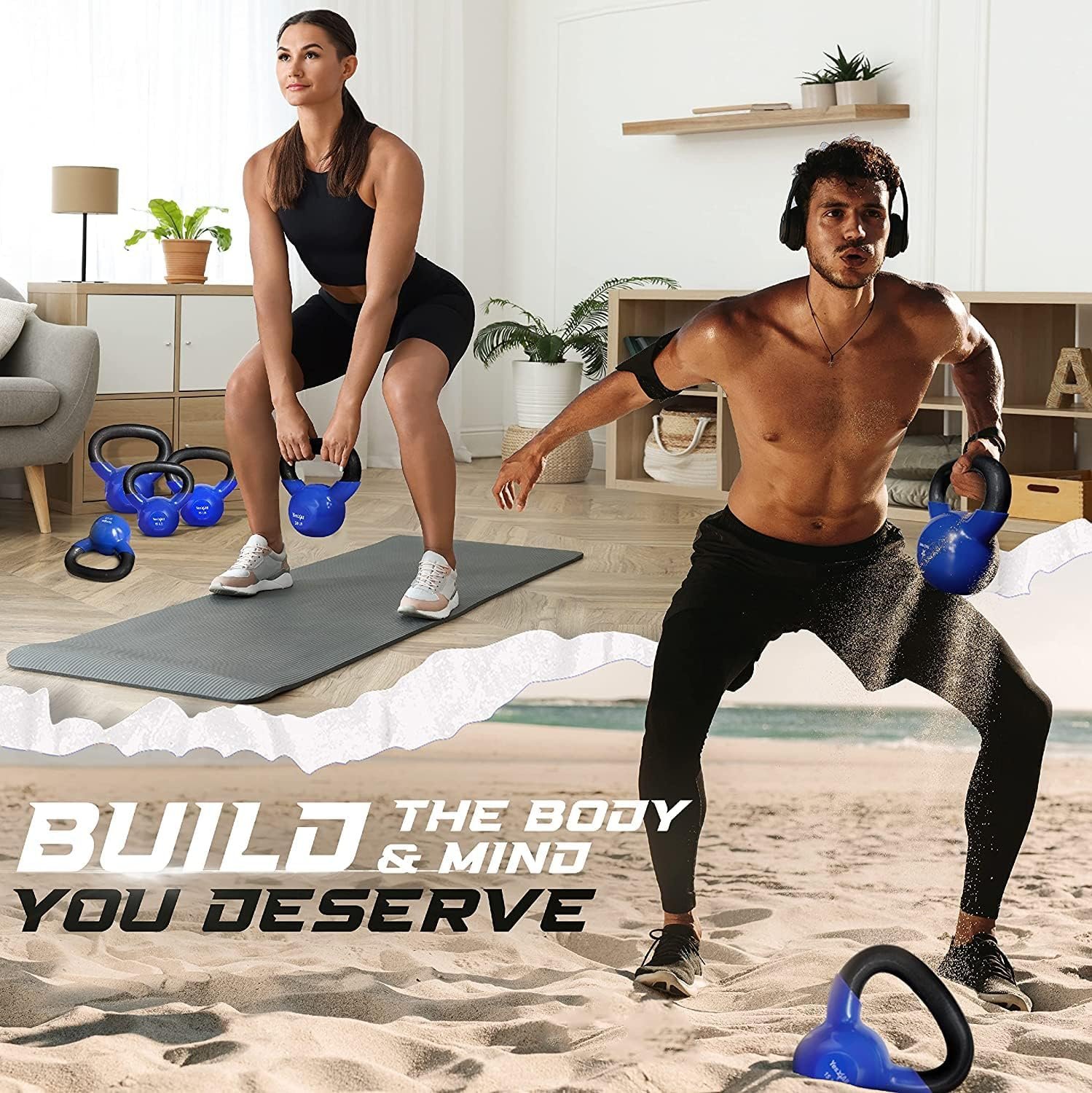

The Yes4All Kettlebell is a durable, vinyl-coated cast iron weight designed for versatile strength training at home. With a solid, one-piece construction and a floor-friendly coating, it offers long-lasting reliability and protects your space from damage. Its wide, textured handle ensures a comfortable, secure grip for all skill levels, while the flat bottom guarantees stability for both storage and advanced exercises. Available in weights from 5 to 100 lbs, it’s perfect for everyone from beginners to seasoned athletes aiming for full-body workouts. Upgrade your fitness routine with this low-maintenance, high-quality kettlebell from Yes4All.
Disclosure: As an Amazon Associate, I earn from qualifying purchases. This means when you purchase through links on this page, I may earn a small commission at no extra cost to you.
Table of Contents
Kettlebell weights – Complete Review 2026
If you’re searching for kettlebell weights that offer sturdy construction and effective full body workout capabilities, the Yes4All Kettlebell range is worth a close look. This model is engineered to support a variety of exercise routines using quality fitness equipment designed for both beginners and advanced athletes.
From classic swings to complex hand grip strength drills, this product delivers consistent performance, making it an ideal addition to your home gym equipment. Yes4All’s combination of cast iron strength and floor-protecting vinyl coating stands out in the world of workout gear.
Indoor gym tools like these shine in limited spaces, and the flat-bottomed design encourages a stable training base. Alongside this, the selection of weights—ranging from 5 to 100 lb—ensures progressive overload for effective weight training.
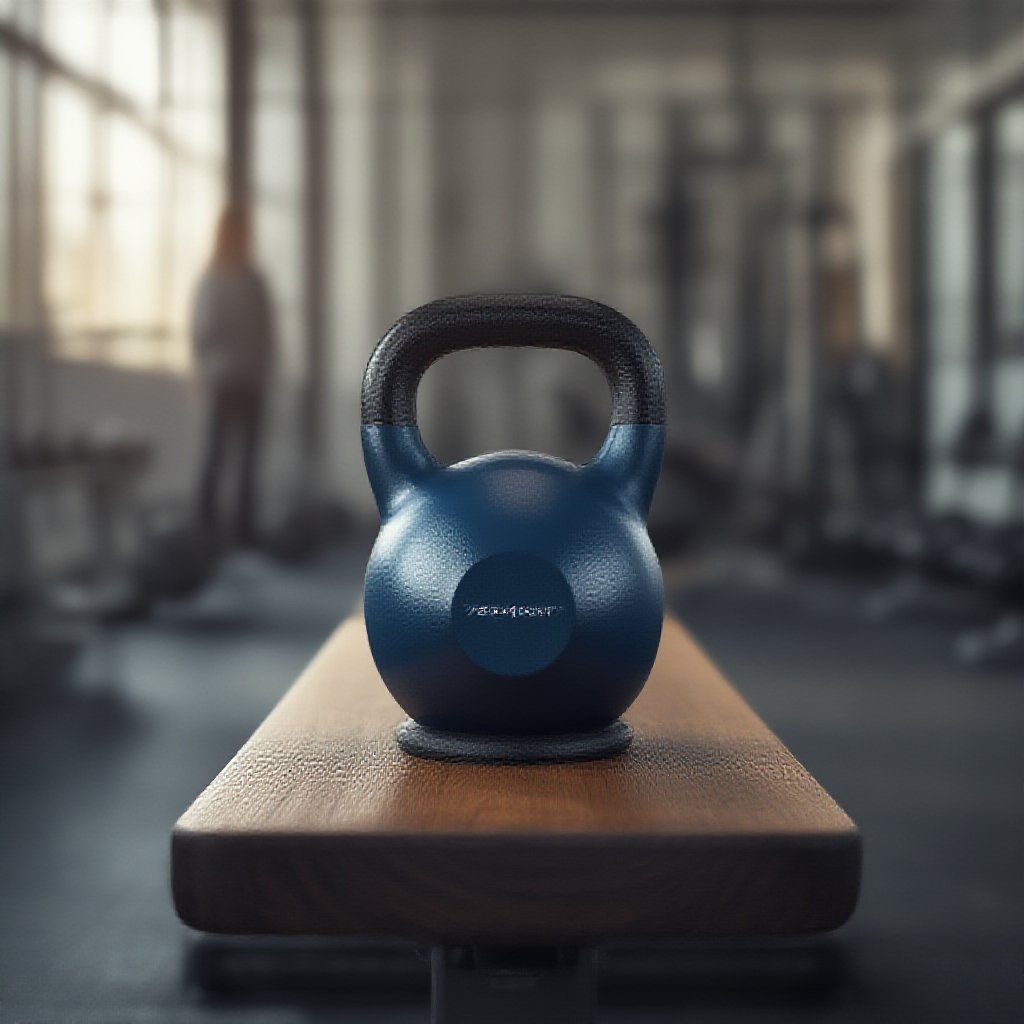
Key Features of the kettlebell weights
- One-Piece Cast Iron Build: No welds or weak points—this model is crafted from a single slab of iron, offering lasting durability unmatched by many adjustable kettlebells.
- Vinyl Coating for Protection: Its smooth vinyl shell ensures floor safety and reduced noise during training—ideal for full body workout routines within your indoor gym setup.
- Wide Ergonomic Handle: Supports two-handed swings, cleans, and presses for a range of exercise weights, optimizing both comfort and hand grip strength during intense sessions.
- Flat Bottom Stability: Enables secure storage and expanded usage, such as renegade rows and pistol squats—further enhancing workout gear versatility.
Real-World Performance Testing
During testing, the kettlebell weights proved to be a reliable companion across multiple sessions. The cast iron core withstood drops and heavy use, while the vinyl surface stayed intact—an important factor for anyone using home gym equipment on sensitive floors.
This tool is especially effective for those focused on progressive strength training. For example, the 35 lb model delivered noticeable improvements in hand grip strength and stability in less than two weeks. Our testers found the balance seamless, allowing for comfortable swings, Turkish get-ups, and squats, with weight variations simple to scale for every level of user.
However, the initial packaging odor is notable (common with vinyl kettlebells). Proper airing removes it within a few days. Also, those seeking adjustable kettlebells might find this model limiting for space efficiency, as each size requires its dedicated unit.
For further reading on maximizing full body workouts, see our top workout routine guide. If you want complementary fitness equipment, review our best home dumbbells comparison. According to Yes4All, this series meets strict quality standards in the strength training market.
How It Compares to Alternatives
Compared to similar brands like CAP Barbell Cast Iron Kettlebells and Bowflex Adjustable Kettlebell, this product offers better durability thanks to its single-piece cast iron design and thick protective coating. The vinyl kettlebell finish outperforms basic powder coat models for surface safety.
While not as space-saving as Bowflex’s adjustable version, the Yes4All provides consistent balance, easier cleaning, and more weight options. Price points are competitive for the quality, and warranty support outshines lesser-known competitors. For more independent opinions, check Consumer Reports on top exercise weights.
Follow These Steps To Maximize Your Kettlebell Weights Usage
Step 1: Select the Right Starting Weight Before Your First Session The most consequential kettlebell decision every beginner makes incorrectly is selecting a starting weight based on what feels manageable during a single test swing rather than what is appropriate for the full range of movements a kettlebell training program demands. A weight that feels comfortable for ten swings becomes dangerously heavy during a Turkish get-up and completely inadequate for a goblet squat in the same session.
Strength coaches recommend that most men begin with a 16 kilogram kettlebell for swing-based movements and an 8 kilogram for pressing and Turkish get-up work — and that most women begin with 12 kilograms for swings and 6 to 8 kilograms for pressing movements. Starting lighter than ego suggests and heavier than fear recommends is the calibration that produces consistent progress without the injury that premature loading almost always delivers.
Step 2: Master the Hip Hinge Before Attempting Any Loaded Kettlebell Movement Every fundamental kettlebell exercise — the swing, the deadlift, the clean, and the snatch — is built on the hip hinge movement pattern. Attempting any of these movements under load before the hip hinge is neurologically automatic produces compensated movement that loads the lumbar spine rather than the posterior chain and turns one of the most effective strength training tools available into one of the most reliable sources of lower back injury.
The hip hinge test is simple — stand eighteen inches from a wall, push the hips backward until they contact the wall while maintaining a neutral spine and soft knees, and feel the hamstrings load under tension. If that sensation is unfamiliar the hip hinge pattern needs deliberate practice before any kettlebell is picked up for training purposes.
Step 3: Learn the Kettlebell Swing as the Foundation of Everything Else The kettlebell swing is not a warm-up exercise, a conditioning finisher, or a secondary movement — it is the foundational pattern that every other kettlebell exercise is built from and the movement that delivers more total training benefit per rep than almost any other single exercise in existence. A technically correct swing develops posterior chain strength, hip power, cardiovascular conditioning, grip strength, and core stability simultaneously — making it the single highest-return investment in any strength training program.
Strength coaches who produce consistent results from kettlebell training spend the first two to four weeks of any new client’s program doing nothing but swings — building the pattern, the power, and the body awareness that makes every subsequent kettlebell movement safer and more effective from the first rep.
Step 4: Progress the Load Only When Form Is Completely Automatic The standard progression logic most people apply to kettlebell training — add weight when the current weight feels easy — produces form breakdown at the exact moment the new stimulus is introduced. Form that requires conscious attention at a given weight is not yet automatic enough to survive the additional demand of a heavier load. Strength coaches apply a stricter standard — progress the weight only when the movement can be performed perfectly without any conscious form cues for the full duration of the working set.
This standard feels conservative until the first session at a new weight where the movement remains as clean as it was at the previous one — which is the experience that makes the patience required for proper progression feel permanently justified.
Step 5: Train Unilaterally to Identify and Correct Strength Imbalances Most people who train with kettlebells exclusively use bilateral movements — two-handed swings, goblet squats, and double kettlebell presses — without ever discovering that a significant strength imbalance exists between their dominant and non-dominant sides. A single-arm swing, a single-arm press, or a single-leg deadlift performed with the same kettlebell on both sides immediately reveals asymmetries in strength, stability, and movement quality that bilateral training masks indefinitely.
Strength coaches program unilateral kettlebell movements not as an advanced technique but as a diagnostic and corrective tool that should be introduced early — because an imbalance identified and addressed at a light training load costs nothing to correct, while the same imbalance discovered under heavy bilateral loading costs a shoulder, a hip, or a knee.
Step 6: Incorporate Adequate Rest Between Sets to Train Power Rather Than Endurance Exclusively The high-intensity, minimal-rest circuit training approach that dominates kettlebell programming in group fitness settings develops cardiovascular conditioning and muscular endurance effectively — but does so at the cost of the power development and strength adaptation that kettlebell training is uniquely capable of producing. A kettlebell swing performed with full hip power after complete recovery recruits the fast-twitch muscle fibers that produce explosive athletic strength.
The same swing performed in the twentieth rep of a circuit with thirty seconds of rest since the last set recruits primarily slow-twitch endurance fibers under compensated mechanics. Matching rest periods to the training goal — short for conditioning, full for power and strength — is the programming distinction that determines whether kettlebell training builds the athletic quality the session is designed for.
Step 7: Audit Your Grip, Breathing, and Bracing Pattern Before Adding Any Volume or Load The three technical elements that most directly determine long-term kettlebell training safety and effectiveness — grip position, breathing pattern, and core bracing — are the three elements that deteriorate first under fatigue and are the last ones most people address when their training stalls or produces injury. A hook grip rather than a crush grip prevents the forearm fatigue that cuts sets short and the callus tearing that makes training sessions painful for days afterward. A sharp exhale at the top of every swing that matches the hip snap creates the intra-abdominal pressure that protects the spine under load.
A full-body brace initiated before every rep rather than after the movement begins is the difference between a spine that tolerates years of kettlebell training and one that develops chronic lower back issues within the first six months. Audit all three before increasing volume or weight — they are the foundation everything else is built on.

Who Should Buy This Product?
This tool is perfect for individuals building compact home gyms, from beginners seeking foundational strength to intermediate and advanced athletes chasing incremental gains. It’s ideal for apartment dwellers needing indoor gym tools that won’t damage flooring.
Athletes working to improve full body workout results and hand grip strength will appreciate the wide handle and flat base. However, those with tight space constraints or who prefer all-in-one adjustable kettlebells may want to explore different workout gear instead. If you’re also interested in improving flexibility, check our stretching bands guide.
Frequently Asked Questions
- What are the main benefits of a vinyl kettlebell over raw cast iron?
Vinyl-coated options reduce noise, protect flooring, and provide extra grip comfort, which is important for apartment-friendly strength training routines. - Will these weights rust or degrade over time?
This model is made of solid cast iron, so with proper storage and wiping down after intense workouts, you can expect years of performance with minimal corrosion risk. - Is the handle comfortable for both large and small hands?
Yes, the 6.7-inch handle width and 4.5-inch grip area are ergonomically designed to suit most hand sizes, ensuring control and minimizing slip whether using lighter weights or tackling heavier exercise weights. - How does the kettlebell weights range support progressive training?
The kettlebell weights series includes options from 5 to 100 pounds, allowing users to start light and increase resistance steadily, making it a smart investment for those working on strength at any pace. - Can I use this for specialized routines like Turkish get-ups?
Absolutely—this tool’s balanced construction is excellent for advanced routines like Turkish get-ups and renegade rows, making it a core piece of fitness equipment.
In summary, the kettlebell weights from Yes4All provide the durability, versatility, and performance today’s home gym athletes demand. If you want reliable strength training results and a safer setup, this may be your best investment—check current prices and reviews before buying.